
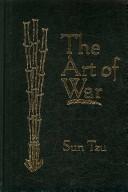
Review: The Art of War: Sun Tzu by Sun Tzu
In a Nutshell
Sun Tzu's "The Art of War" is an ancient, enduring treatise on strategy, offering timeless principles for conflict resolution and competitive advantage applicable to business and life.
It is often said that true wisdom transcends time, and few texts embody this adage more profoundly than Sun Tzu's "The Art of War." Generations have grappled with its stark pronouncements, finding in its ancient pages not just the secrets of battlefield triumph, but enduring principles applicable to the cutthroat arenas of business and life itself. To dismiss it as a mere military manual is to profoundly misunderstand its genius.
At its core, "The Art of War" is a philosophical treatise on strategy and conflict, distilling centuries of military thought into a remarkably concise and aphoristic form. Sun Tzu, a purportedly fifth-century BC Chinese general, lays bare the fundamental tenets of warfare: the paramount importance of knowing oneself and one's enemy, the art of deception, the advantage of swift and decisive action, and the ultimate goal of achieving victory without fighting. It’s a manual for the strategist, advocating for intellectual dominance over brute force, for foresight over reaction, and for understanding the subtle currents that dictate outcomes.
What works so beautifully about "The Art of War" is its almost unnerving timelessness and its universality. Sun Tzu’s prose, even in translation, possesses a stark, aphoristic power that allows each maxim to resonate deeply. Consider the famous injunction, "Supreme excellence consists in breaking the enemy's resistance without fighting." This isn't just a military tactic; it's a profound insight into negotiation, leadership, and even interpersonal conflict. The book’s brilliance lies in its ability to present complex strategic concepts in such accessible, digestible nuggets. It’s like finding a set of perfectly honed tools, each designed for a specific, critical task. I found myself returning to certain passages repeatedly, each rereading revealing new layers of meaning and application, much like one might revisit Machiavelli’s "The Prince" for its stark political realism, though Sun Tzu’s focus is decidedly on prevention and calculated advantage.
The book’s structure, broken into thirteen chapters, each addressing a distinct aspect of warfare from initial planning to the use of spies, creates a comprehensive yet surprisingly fluid reading experience. There’s a deliberate and satisfying logic to the progression of ideas. Furthermore, its emphasis on adaptability and the fluidity of strategy, the idea that one must constantly adjust to changing circumstances, feels particularly relevant in today's rapidly evolving business landscape. It encourages a mindset of proactive planning and a deep understanding of one's environment, a stark contrast to reactive, short-sighted decision-making. This focus on foresight and psychological advantage, rather than mere tactical maneuvering, is what elevates it beyond a simple instruction manual.
If there’s an area where "The Art of War" might be perceived as needing supplementation, it lies in the very abstraction that makes it so enduring. Sun Tzu offers principles, not prescriptive step-by-step guides. For modern readers, particularly those accustomed to detailed case studies or actionable blueprints, the lack of explicit, granular examples for contemporary scenarios might present a challenge. While the principles are undeniably sound, translating them into concrete, actionable strategies for a specific business or competitive situation requires a significant degree of interpretation and contextualization by the reader. This is not a fault of the text itself, but rather a characteristic inherent in its ancient, philosophical nature. It demands active engagement and critical thinking from its audience, rather than passive consumption.
Ultimately, "The Art of War" is less a book to be read once and set aside, and more a wellspring to be drawn from repeatedly. It offers not just a framework for understanding conflict, but a profound lesson in the power of intelligence, preparation, and restraint. It is a testament to the enduring human quest for efficacy and a reminder that the greatest victories are often those that are never fought. For any aspiring leader, strategist, or indeed, anyone navigating the complexities of competition, this ancient text remains an indispensable guide, a whispered counsel from the ages that continues to shape the world.
More Reviews
Review: The Audacity of Hope: Thoughts on Reclaiming the American Dream by Barack Obama
by Barack Obama
Review: Six of Crows by Leigh Bardugo
by Leigh Bardugo
Review: Atom Habits: An Easy & Proven Way to Build Good Habits & Break Bad Ones by James Clear
by James Clear