
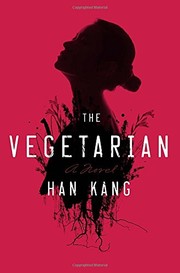
Review: The Vegetarian by Han Kang
In a Nutshell
A woman's radical rejection of meat escalates into a disturbing quest for plant-like existence, shattering her family and societal norms.
Han Kang’s *The Vegetarian* is less a novel and more a visceral excavation of the porous boundaries between the human and the non-human, the corporeal and the abstract. It’s a book that lingers, a dreamlike horror that seeps into your consciousness, forcing a reconsideration of what it means to be alive, to desire, and ultimately, to cease.
At its core, *The Vegetarian* chronicles the radical transformation of Yeong-hye, a seemingly ordinary South Korean woman who, after a disturbing dream, decides to renounce all meat. This seemingly simple act of dietary defiance rapidly escalates into a profound rejection of societal norms, familial expectations, and ultimately, her own human form. The narrative unfolds through the perspectives of her husband, her brother-in-law, and her sister, offering fragmented glimpses into Yeong-hye’s increasingly detached existence, her descent into what many perceive as madness, and her persistent, almost spiritual, desire to become a plant.
What works so spectacularly about *The Vegetarian* is Kang’s masterful control of atmosphere and her unsettlingly precise prose. The novel possesses a dreamlike quality, even in its most brutal moments, a testament to Kang’s ability to imbue the mundane with a creeping sense of dread. The opening section, narrated by Yeong-hye’s husband, is a chilling portrayal of a man utterly bewildered by his wife’s inexplicable metamorphosis, his sterile disgust mirroring the societal revulsion that Yeong-hye increasingly faces. The subsequent sections, particularly the one focusing on her sister, In-hye, introduce a palpable sense of helpless love and the desperate, often futile, attempts to pull Yeong-hye back from the precipice of her self-imposed exile. The imagery is stark and unforgettable: the raw, dripping meat at a family dinner that triggers Yeong-hye’s initial revulsion, the brother-in-law’s obsessive attempts to capture her “flower-like” essence on film, and Yeong-hye’s own quiet insistence on a life rooted in the earth. Kang doesn't shy away from the grotesque, but it’s always rendered with an almost delicate, poetic touch, reminiscent of the unsettling beauty found in Kafka’s *The Metamorphosis* or the visceral psychological horror of Shirley Jackson.
However, while the novel’s fragmented structure is largely effective in building its disorienting power, there are moments where the narrative feels a touch too elliptical, leaving certain emotional threads, particularly those concerning In-hye’s own internal struggles, feeling slightly underdeveloped. The sheer intensity of Yeong-hye’s transformation, while captivating, can sometimes overshadow the broader implications for the other characters who orbit her. While this might be intentional, a deliberate focus on Yeong-hye’s internal world, a few more pages exploring In-hye’s own fraying sanity might have added another layer of complexity to the already potent exploration of familial strain and the suffocating weight of societal expectations.
Ultimately, *The Vegetarian* is a profound and disturbing masterpiece that demands to be experienced. It’s a novel that interrogates the very essence of humanity, asking us to consider the violence inherent in our daily lives and the quiet rebellion that can bloom in the most unexpected places. For readers who appreciate literary fiction that pushes boundaries, explores the darker corners of the psyche, and lingers long after the final page, this is an essential, unforgettable read. It will leave you questioning the meat on your plate and the ground beneath your feet.
More Reviews
Review: The Audacity of Hope: Thoughts on Reclaiming the American Dream by Barack Obama
by Barack Obama
Review: Six of Crows by Leigh Bardugo
by Leigh Bardugo
Review: Atom Habits: An Easy & Proven Way to Build Good Habits & Break Bad Ones by James Clear
by James Clear