

Review: Circe by Madeline Miller
In a Nutshell
Madeline Miller's "Circe" reclaims the sorceress's story, charting her journey from forgotten divinity to sovereign self-discovery through lyrical prose and profound introspection.
Madeline Miller’s *Circe* is a quiet rebellion whispered across millennia. It takes a figure often relegated to the periphery of myth, a sorceress known for her transformations and her exile, and grants her an epic, achingly human voice. This is not a story of gods and heroes in their grand, immutable forms, but of a minor goddess forging her own destiny in the crucible of her own making, proving that even in a world saturated with divinity, the most potent magic resides in resilience and self-discovery.
At its heart, *Circe* is the story of a woman’s long, winding journey from invisibility to sovereignty. Born the unwanted daughter of Helios, the sun god, and a nymph, Circe is awkward, frail, and utterly without the dazzling power or cruel beauty of her divine kin. Her early life is marked by scorn and isolation, a painful education in the contempt of those who possess inherent privilege. But within this seemingly powerless nymph, a spark of something extraordinary ignites: *pharmaka*, the potent magic of herbs and potions, and an even more potent will to understand the world and her place within it. Exiled to the island of Aiaia for daring to wield her power, Circe encounters a parade of legendary figures – Hermes, Daedalus, the Minotaur, Odysseus, and many more – each encounter shaping her, testing her, and ultimately, revealing the depth of her own strength and compassion.
What Miller achieves here is nothing short of breathtaking. Her prose is luminous, possessing a sinuous grace that perfectly mirrors Circe’s own evolution. There are passages so beautifully rendered they feel like sunlight dappling through ancient leaves, particularly when Circe tends her garden or crafts her potions. The novel excels in its intimate portrayal of Circe’s internal landscape. We witness her grappling with loneliness, the sting of betrayal, the quiet joy of creation, and the fierce protectiveness of a mother. This isn't a passive protagonist; Circe is an active agent in her own story, making mistakes, learning from them, and constantly seeking to understand the complex tapestry of mortal and divine existence. Miller masterfully reinterprets familiar myths, imbuing them with a fresh, grounded perspective. The encounters with Odysseus, for instance, are not merely plot points but nuanced examinations of the fraught dynamics between gods, mortals, and the echoes of ambition and desire that bind them. It’s a narrative that breathes new life into ancient tales, making them feel as relevant and vital today as they were in their original telling.
The pacing, while generally fluid, does occasionally feel a touch leisurely, particularly in the middle sections of the novel. While this allows for deep character immersion and the development of Circe’s contemplative nature, there are moments where the narrative seems to meander, a consequence, perhaps, of chronicling an immortal lifespan. One might also argue that certain mythological figures, while vividly drawn, feel slightly underdeveloped, serving more as catalysts for Circe’s growth than fully realized characters in their own right. However, these are minor quibbles in an otherwise masterful tapestry, and the novel’s deliberate pacing ultimately serves its exploration of time, memory, and the slow, inexorable forging of identity.
*Circe* is a triumphant reclamation of a female figure often demonized or sidelined in classical literature. It’s a novel that speaks to the enduring power of the marginalized, the quiet strength found in resilience, and the profound beauty of a life lived on one’s own terms. Readers who appreciate lyrical prose, rich character development, and a thoughtful reimagining of myth will find themselves utterly captivated. Miller has gifted us not just a novel, but a profound meditation on what it means to be both divine and deeply, irrevocably human, leaving us with the unshakable sense that the greatest transformations are often born from within, nurtured in solitude and tempered by the fires of lived experience. The echo of Circe’s power, once contained by divine decree, now resonates with the force of a fully realized soul.
More Reviews

Review: The Audacity of Hope: Thoughts on Reclaiming the American Dream by Barack Obama
by Barack Obama
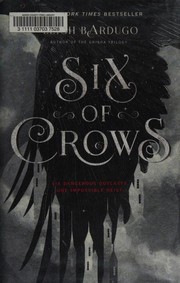
Review: Six of Crows by Leigh Bardugo
by Leigh Bardugo
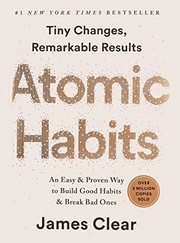
Review: Atom Habits: An Easy & Proven Way to Build Good Habits & Break Bad Ones by James Clear
by James Clear