

Review: The Essential Rumi by Rumi and Coleman Barks
In a Nutshell
Coleman Barks's "The Essential Rumi" offers timeless Persian mystic poetry on love, the divine, and the soul's quest, resonating with profound spiritual clarity.
In a world often drowning in the cacophony of the mundane, Jalal al-Din Rumi’s verses, as curated and rendered by Coleman Barks, offer a profound and timeless sanctuary. "The Essential Rumi" doesn’t just present poetry; it unfurls a spiritual landscape, a yearning for the divine that resonates across centuries and cultures with an almost startling immediacy. The sheer force of Rumi’s mystical vision, filtered through Barks’s sensitive and accessible translation, feels less like reading and more like remembering a fundamental truth.
At its heart, "The Essential Rumi" is a collection of the 13th-century Persian mystic's deepest reflections on love, loss, the nature of God, and the human soul's relentless quest for union with the Beloved. There is no linear narrative here, no cast of characters in the conventional sense. Instead, we encounter Rumi himself, his ecstatic pronouncements, his tender consolations, his sharp rebukes, and his boundless embrace of life in all its messy, divine glory. The book is a tapestry woven from Sufi philosophy, Persian poetic tradition, and a raw, unfiltered spiritual experience that transcends dogma.
What works so beautifully, and indeed, what has cemented this collection's place in the modern literary canon, is Barks's masterful stewardship of Rumi's voice. Barks doesn't attempt a scholarly, metrically precise translation; instead, he offers what he calls "translations" or "versions," prioritizing the spirit and emotional impact of the original Persian. This approach allows Rumi's profound insights to land with a force that can leave the reader breathless. Passages like "I am not a saint, I am not a scholar, I am a lover" or the ubiquitous "Out beyond ideas of wrongdoing and rightdoing, / there is a field. / I'll meet you there" possess an astonishing clarity and accessibility. The language, while poetic, feels remarkably contemporary, shedding the perceived distance of archaic verse. I found myself returning to these lines repeatedly, each reading revealing a new layer of meaning, a fresh spark of illumination. The poems possess a rhythm that feels organic, as if the words themselves are breathing, pulsing with the very life force Rumi extols.
Furthermore, the sheer breadth of themes explored is remarkable. Rumi grapples with the pain of separation from the Divine, the intoxicating nature of spiritual intoxication, the humbling wisdom found in everyday existence, and the transformative power of selfless love. He speaks of the heart as a vessel, constantly being emptied and refilled, a metaphor that carries immense weight. His ability to articulate the ineffable, to put words to the often-unseen currents of spiritual yearning and divine presence, is nothing short of miraculous. In this regard, he stands shoulder to shoulder with other mystics who have sought to bridge the gap between the human and the divine, from St. John of the Cross to Hafiz, though Rumi’s particular brand of ecstatic, celebratory mysticism feels uniquely his own.
If there’s an area where "The Essential Rumi" might, for some readers, feel less polished, it is precisely in its deliberate lack of formal structure or overarching narrative. This is not a criticism of the collection itself, as it is fundamentally a compilation of scattered poems and fragments, but rather an acknowledgment of its nature. Those accustomed to narrative arcs or tightly constructed thematic progressions might occasionally find themselves adrift in the ocean of Rumi's ecstatic pronouncements. The sheer volume of ecstatic pronouncements, while exhilarating, can sometimes feel like standing in a downpour of divine light, overwhelming and, at times, difficult to fully grasp in its entirety without some personal effort to find one’s own bearings.
However, this very quality of expansive, non-linear spiritual exploration is also its greatest strength. It invites the reader to dip in and out, to find the poem that speaks to their soul on any given day, rather than demanding a sustained, linear engagement. The book is a wellspring, not a carefully manicured garden. It’s a book to be lived with, to be marked up, to be carried in one’s bag and opened at random moments when the spirit needs tending. "The Essential Rumi" is an indispensable companion for anyone seeking solace, wisdom, or a profound reconnection with the spiritual dimension of life. It reminds us that the deepest truths are often found not in complex doctrines, but in the simple, unadorned language of the heart. Readers will walk away with a renewed sense of wonder and an invitation to embrace the mystery of existence with open arms.
More Reviews
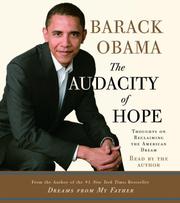
Review: The Audacity of Hope: Thoughts on Reclaiming the American Dream by Barack Obama
by Barack Obama
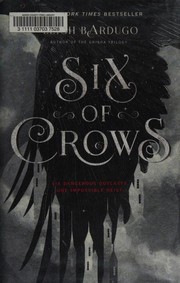
Review: Six of Crows by Leigh Bardugo
by Leigh Bardugo
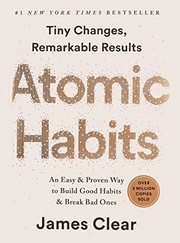
Review: Atom Habits: An Easy & Proven Way to Build Good Habits & Break Bad Ones by James Clear
by James Clear