
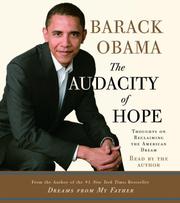
Review: The Audacity of Hope: Thoughts on Reclaiming the American Dream by Barack Obama
In a Nutshell
Barack Obama's "The Audacity of Hope" offers a deeply personal exploration of American ideals, urging readers to actively reclaim the American Dream through thoughtful engagement and collective action.
Barack Obama’s “The Audacity of Hope” doesn't just argue for a renewed vision of the American Dream; it embodies it, weaving together personal narrative, policy prescriptions, and a profound belief in the power of collective action. It’s a testament to the enduring, if often challenged, spirit that has fueled this nation’s progress, a call to arms for citizens to actively participate in shaping their future.
The book, published in 2006, serves as a crucial primer to Obama's political philosophy and his aspirations for America. It's less a traditional memoir and more a deeply personal exploration of the ideas and experiences that forged his worldview. Through a series of essays touching on race, family, religion, politics, and the economy, Obama unpacks the complexities of modern American life, seeking to identify the fault lines that divide us and the shared aspirations that can bind us. He doesn’t offer easy answers, but rather a framework for thoughtful engagement, a plea for a more inclusive and hopeful national conversation.
What works beautifully in “The Audacity of Hope” is Obama's remarkable ability to bridge the intellectual and the emotional. His prose, even when tackling dense policy issues, possesses a rare clarity and lyrical quality. He manages to articulate complex ideas with an accessible grace, making them resonate beyond the echo chambers of political discourse. I found myself particularly struck by his reflections on his own identity, a tapestry woven from diverse threads of experience that mirrors the American experiment itself. His chapter on faith, for instance, is a masterclass in nuanced exploration, acknowledging the profound role of religious belief while simultaneously advocating for a secular public square that respects all viewpoints. This isn't the bombastic rhetoric of partisan cheerleading; it's the measured, empathetic voice of a leader genuinely grappling with the nation's challenges and seeking common ground, reminiscent of the thoughtful deliberations found in, say, Robert F. Kennedy's later writings.
Furthermore, Obama’s commitment to the idea of hope, not as a passive wish but as an active, deliberate force, is palpable throughout the book. He meticulously dissects the cynicism that can grip the American psyche, arguing that it is our collective responsibility to resist it. He doesn't shy away from the historical injustices or the contemporary struggles that plague the nation, but rather frames them as obstacles to be overcome, not insurmountable barriers. The way he connects the grand ideals of the Declaration of Independence to the everyday realities of working families is particularly effective, grounding his vision in tangible needs and shared desires. He consistently returns to the notion that the American Dream is not a fixed inheritance but a continuous creation, one that requires vigilance and active participation from all its beneficiaries.
However, while the book’s ambition is undeniably laudable, there are moments where the expansive scope of its inquiry can feel a touch diffuse. In its earnest attempt to touch upon so many facets of American life, some individual arguments, particularly in the latter half of the book, might have benefited from deeper dives. While the policy prescriptions are thoughtfully presented, they sometimes feel like sketches rather than fully rendered portraits, leaving the reader with a desire for more concrete, actionable details. This is, of course, a delicate balance; an overly granular approach could have bogged down the overarching message of hope and broad vision. Still, I occasionally wished for a more sustained focus on a particular issue, allowing for a more profound exploration before transitioning to the next.
Ultimately, “The Audacity of Hope” is a powerful and persuasive articulation of a political philosophy grounded in empathy and a deep-seated belief in the possibility of progress. It’s a book that invites introspection, encouraging readers to consider their own role in the ongoing project of building a more just and equitable society. For anyone seeking to understand the intellectual and moral underpinnings of a transformative political figure, or simply to re-engage with the foundational ideals of American democracy, this work is essential reading. It reminds us that the American Dream, however battered, is still a dream worth fighting for, and that the audacity to believe in it is the first, most crucial step towards its realization.
More Reviews

Review: Six of Crows by Leigh Bardugo
by Leigh Bardugo
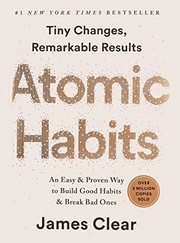
Review: Atom Habits: An Easy & Proven Way to Build Good Habits & Break Bad Ones by James Clear
by James Clear
Review: The Difficulty of Being Good: On the Subtle Art of Ethics by Gurcharan Das
by Gurcharan Das