
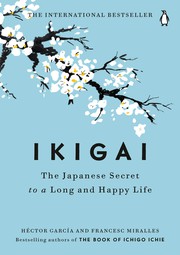
Review: Ikigai: The Japanese Secret to a Long and Happy Life by Héctor García and Francesc Miralles
In a Nutshell
Discover 'ikigai,' the Japanese secret to a long, happy life, through Okinawan wisdom and actionable insights for finding your purpose.
The quest for a long and happy life is as old as humanity itself, yet in our modern, often frantic world, the answer seems to elude us more than ever. What if, however, the secret wasn't a complex philosophical treatise or a grueling self-improvement regimen, but something woven into the very fabric of daily existence, as simple and profound as finding your reason for getting up in the morning? Héctor García and Francesc Miralles's "Ikigai: The Japanese Secret to a Long and Happy Life" invites us to explore just that, delving into a concept that has captivated the world and offered a gentle, accessible path toward a more fulfilling existence.
At its heart, the book is an exploration of 'ikigai,' a Japanese term that loosely translates to 'a reason for being.' García and Miralles journey to the island of Okinawa, a renowned 'blue zone' where the population enjoys remarkable longevity and vibrance, to uncover the cultural and personal elements that contribute to this phenomenon. They speak with centenarians, observe their daily routines, and share insights into their philosophies, all while weaving in scientific research on aging and well-being. The narrative isn't a prescriptive self-help manual in the typical Western sense; rather, it's an observational piece, a gentle invitation to consider what truly gives life meaning and purpose, illustrated through the lived experiences of those who embody it.
What works beautifully in "Ikigai" is its profound simplicity and the authenticity of its approach. Unlike many books that offer a 'ten-step plan' to happiness, García and Miralles present a concept that is deeply personal and organically integrated into life. The profiles of Okinawan elders are particularly compelling. They aren't depicted as superhuman figures, but as ordinary people who have found extraordinary contentment by cherishing small joys, maintaining strong social connections, and engaging in activities that bring them a sense of purpose, whether it's gardening, practicing calligraphy, or simply enjoying a cup of tea with friends. This grounded portrayal makes the concept of ikigai feel attainable, not like an elusive ideal. The prose itself is lucid and inviting, making complex ideas accessible without oversimplifying them. It reads more like a thoughtful travelogue infused with wisdom than a dry academic study, a quality I found myself appreciating immensely.
The book also succeeds in its gentle encouragement to re-evaluate our own lives. It prompts introspection without judgment, nudging us to consider if our daily pursuits align with our deepest values. The authors skillfully connect the Okinawan way of life to broader principles of positive psychology and the science of longevity, such as the importance of community, a sense of purpose, and mindful living. The comparison to Western notions of success, often tied to wealth and status, highlights the book's unique perspective. It suggests that true fulfillment might lie not in accumulating more, but in appreciating what we have and engaging deeply with the present moment. This philosophical underpinning, supported by real-world examples, gives the book a quiet power.
If there's an area where "Ikigai" could perhaps be strengthened, it might be in offering more concrete, actionable steps for readers who are far removed from the Okinawan lifestyle. While the book excels at illustrating the concept, the transition from understanding ikigai to actively cultivating it in a vastly different cultural context can feel a little abstract. Some readers might yearn for more direct guidance on how to identify or nurture their own ikigai amidst the pressures of modern careers and responsibilities. While the book emphasizes that ikigai can be found in small things, a slightly more detailed exploration of how to systematically uncover these 'small things' within a busy schedule could have added another layer of practical value. It's a minor quibble, however, in what is otherwise a deeply resonant read.
Ultimately, "Ikigai" is a balm for the weary soul in a world that often glorifies busyness over being. It doesn't offer a magic bullet for happiness, but rather a profound, culturally informed perspective that suggests a more sustainable, joyful way of living. It's a book perfect for anyone feeling adrift, questioning their purpose, or simply seeking a gentler, more mindful approach to life's journey. Readers will likely finish it feeling a quiet sense of hope and a renewed appreciation for the simple, yet profound, act of finding one's reason for being. It's a reminder that the path to a long and happy life might just be found in the everyday moments we often overlook.
More Reviews

Review: The Audacity of Hope: Thoughts on Reclaiming the American Dream by Barack Obama
by Barack Obama

Review: Six of Crows by Leigh Bardugo
by Leigh Bardugo

Review: Atom Habits: An Easy & Proven Way to Build Good Habits & Break Bad Ones by James Clear
by James Clear