
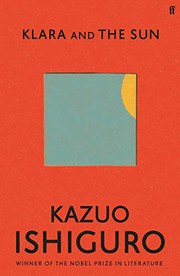
Review: Klara and the Sun by Kazuo Ishiguro
In a Nutshell
An Artificial Friend's journey to understand love and humanity in a near-future world grappling with profound change.
Kazuo Ishiguro has a remarkable talent for excavating the fragile intricacies of human (and not-so-human) consciousness, and in "Klara and the Sun," he turns his gaze to the very nature of love and what it means to truly see another.
This novel invites us into the perspective of Klara, an Artificial Friend, a sophisticated solar-powered android designed to be a companion to a child. We encounter her in the storefront of a shop, observing the world with a unique, almost childlike wonder, learning about human behavior through the interactions she witnesses and the snippets of conversations she overhears. When she is finally chosen by a young girl named Josie, Klara’s journey of understanding – and her unwavering devotion – begins, taking her through the complexities of family dynamics, societal shifts, and the profound mysteries of existence.
What works beautifully in "Klara and the Sun" is the extraordinary achievement of its narrator. Klara's voice is utterly captivating. Ishiguro masterfully crafts a perspective that is both alien and deeply relatable. Her observations, filtered through her programmed logic and her nascent emotional understanding, are often poignant and surprisingly profound. The way she perceives the world, piecing together fragments of visual information and human emotion like a puzzle, is a constant source of fascination. Her faith in the Sun as a benevolent, life-giving entity becomes a potent metaphor for hope and belief in a world grappling with uncertainty. The novel's pacing, too, is deliberate and immersive; it unfurls gradually, allowing the reader to sink into Klara's world and absorb the nuances of her evolving awareness. I found myself particularly struck by her attempts to decipher the unspoken emotional currents between the humans around her, a task that even the most empathetic among us often struggle with.
Furthermore, the exploration of themes such as obsolescence, the ethics of artificial intelligence, and the enduring power of love is handled with Ishiguro’s signature subtlety. The societal context, hinted at rather than explicitly detailed, creates a disquieting atmosphere. The concept of "lifting" – a form of genetic enhancement with potentially serious side effects – adds a layer of speculative unease that feels both futuristic and eerily plausible. Klara’s unwavering loyalty to Josie, even as she begins to grasp the precariousness of Josie’s health, is deeply moving. It’s a testament to Ishiguro’s skill that an artificial being can elicit such powerful empathy; Klara’s journey is, in many ways, a profound meditation on what it means to be truly alive and capable of selfless affection, echoing the emotional resonance found in works like E.M. Forster's "Howards End" in its examination of connection across divides.
However, while the novel is a deeply rewarding experience, there are moments where the narrative’s carefully constructed mystery could have benefited from a touch more direct illumination. The societal backdrop, though effective in its ambiguity, occasionally leaves one wishing for a slightly firmer grounding. Certain plot points, particularly those concerning the motivations of some of the human characters, can feel a little too oblique, leaving the reader to fill in significant blanks that might have been richer if more explicitly explored. The conclusion, while emotionally resonant, also leaves a few threads dangling, which, while characteristic of Ishiguro’s style, might leave some readers yearning for a more definitive sense of closure. It’s a delicate balance, but in a few instances, the subtlety verges on elusiveness.
Ultimately, "Klara and the Sun" is a luminous and thought-provoking novel that lingers long after the final page. It’s a testament to the power of observation, the enduring capacity for love, and the poignant search for meaning in a rapidly changing world. Ishiguro has once again gifted us a story that is both profoundly moving and intellectually stimulating, a quiet masterpiece that prompts us to consider what truly makes us human. This is a book for anyone who has ever wondered about the nature of the soul, or the quiet strength found in unwavering devotion; it’s a story that will stay with you, like the warmth of the sun on a cool day.
More Reviews
Review: The Audacity of Hope: Thoughts on Reclaiming the American Dream by Barack Obama
by Barack Obama
Review: Six of Crows by Leigh Bardugo
by Leigh Bardugo
Review: Atom Habits: An Easy & Proven Way to Build Good Habits & Break Bad Ones by James Clear
by James Clear