
Review: Sapiens: A Brief History of Humankind by Yuval Noah Harari
In a Nutshell
Yuval Noah Harari's "Sapiens" offers a sweeping, unforgettable history of humankind, challenging our assumptions about our past, present, and future.
The cognitive revolution, as Yuval Noah Harari terms it, didn't just change how our ancestors thought; it fundamentally altered the very fabric of reality, allowing Homo sapiens to outcompete every other species on Earth. This pivotal shift, the genesis of shared myths and imagined orders, forms the bedrock of Harari's sweeping narrative in "Sapiens: A Brief History of Humankind." It’s a book that doesn’t just recount history; it interrogates the very concepts that have shaped our societies, from money and religion to nations and human rights, positing them as fictions that have proven remarkably effective.
At its core, "Sapiens" is an ambitious attempt to chart the entire trajectory of humankind, from our humble beginnings as insignificant apes to our current status as planetary dominators. Harari guides us through three major revolutions: the Cognitive Revolution, which imbued our ancestors with the power of abstract thought and language; the Agricultural Revolution, a seeming leap forward that, in his view, led to a host of new problems; and the Scientific Revolution, which has propelled us into an era of unprecedented technological advancement and existential uncertainty. He masterfully weaves together insights from history, biology, anthropology, and economics to present a cohesive, albeit sometimes provocative, account of how we got here and where we might be going.
What Harari achieves with "Sapiens" is nothing short of breathtaking in its scope and intellectual daring. His ability to synthesize vast amounts of information into a clear, accessible, and often witty narrative is remarkable. He possesses a rare talent for making complex ideas feel intuitive, connecting seemingly disparate historical events and social phenomena with elegant, thought-provoking arguments. For instance, his dissection of how the development of writing enabled the administration of large empires and the management of complex economic systems, or his exploration of how shared myths, like those surrounding gods or corporations, allow millions of strangers to cooperate effectively, are brilliant examples of his insightful analysis. The prose is consistently engaging, managing to be both intellectually rigorous and genuinely enjoyable to read, a feat few authors in this genre can claim. He often uses analogies that resonate deeply, making the grand sweep of history feel personal and relevant. I found myself frequently pausing, not out of confusion, but out of sheer admiration for the clarity and audacity of his thinking, much like I experienced when reading Jared Diamond's "Guns, Germs, and Steel" for its ecological determinism, though Harari's focus is more on the power of collective belief and cognitive leaps.
However, while "Sapiens" is a monumental achievement, it is not without its areas for refinement. Harari’s tendency towards grand, sweeping pronouncements, while often compelling, can sometimes oversimplify complex historical processes or present debated theories as established fact. For example, his characterization of the Agricultural Revolution as "history's biggest fraud" is a powerful rhetorical device, but it risks downplaying the genuine advancements and varied experiences of different agricultural societies. Furthermore, while the book excels at providing a broad overview, some readers might find that certain historical periods or cultural developments receive less attention than they deserve, leading to a narrative that, by necessity, glosses over nuances. The focus remains consistently on the large-scale forces shaping humanity, which, while the book's strength, occasionally leaves the individual human experience feeling somewhat abstract or secondary in the grand historical narrative.
Despite these minor reservations, "Sapiens" stands as a truly exceptional work of non-fiction. It challenges readers to reconsider their most fundamental assumptions about humanity, history, and the future. Harari doesn't just recount the past; he provides a powerful lens through which to understand the present and contemplate the implications of our species' trajectory. It's a book that sparks conversation, provokes thought, and ultimately leaves a lasting impression, compelling us to ask profound questions about what it means to be human in an ever-changing world. Readers will close its pages with a renewed sense of wonder, perhaps a touch of existential dread, but undeniably with a vastly expanded perspective on our collective journey. It’s the kind of book that reshapes how you see everything.
More Reviews

Review: The Audacity of Hope: Thoughts on Reclaiming the American Dream by Barack Obama
by Barack Obama
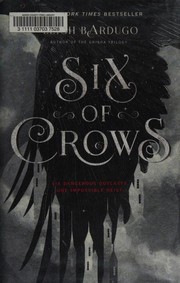
Review: Six of Crows by Leigh Bardugo
by Leigh Bardugo

Review: Atom Habits: An Easy & Proven Way to Build Good Habits & Break Bad Ones by James Clear
by James Clear