
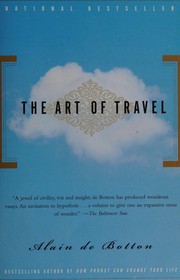
Review: The Art of Travel by Alain de Botton
In a Nutshell
Alain de Botton's "The Art of Travel" philosophically explores the gap between our idealized notions of travel and its often mundane reality.
Alain de Botton, a philosopher often concerned with the mundane and the overlooked, turns his keen intellect to the seemingly simple act of travel in "The Art of Travel." He doesn't offer a guide to packing or a list of must-see destinations. Instead, he excavates the *idea* of travel, the yearning for escape, and the often-disappointing reality that follows. This is a book for anyone who has ever felt the pull of the horizon, only to find that the exotic location fails to cure the internal restlessness that prompted the journey in the first place. De Botton suggests that our romanticized notions of travel, fueled by literature and art, set us up for inevitable disappointment. We expect grand epiphanies and profound self-discoveries, but often we are met with jet lag, tourist traps, and the simple, unvarnished truth that we carry ourselves wherever we go.
The book masterfully unpacks this central tension. De Botton delves into the psychological underpinnings of wanderlust, examining how we project our desires and expectations onto foreign landscapes. He draws upon a rich tapestry of literary and artistic references, from Wordsworth and Baudelaire to Van Gogh and Flaubert, to illustrate how different individuals have sought meaning and solace in their travels. What works beautifully here is de Botton's ability to connect these grand artistic expressions to the everyday experiences of the modern traveler. He doesn't just present philosophical insights; he grounds them in relatable scenarios, such as the frustration of a delayed flight or the surprisingly mundane nature of a famous landmark. This creates a profound sense of recognition, making the reader feel understood in their own travel anxieties and aspirations. It's a refreshing antidote to the often-glossy, aspirational narratives of travel found in magazines and on social media, which tend to ignore the complexities and occasional mundanity of the experience.
One of the book's greatest strengths lies in its prose, which is as elegant and thoughtful as the ideas it conveys. De Botton possesses a rare gift for making complex philosophical concepts accessible and engaging. He writes with a gentle, almost conversational tone that invites the reader into a shared exploration of ideas. His observations about our attachment to the familiar, even as we seek the exotic, are particularly resonant. He suggests that perhaps the true art of travel lies not in escaping ourselves, but in learning to see the familiar with new eyes, a perspective that can be gained even in the comfort of our own homes. This is a subtle but powerful reframing of what travel can and should be, moving beyond mere destination-hopping to a more profound internal journey. I found myself nodding along to his dissections of the tourist mentality, recognizing my own foibles and those of the people around me.
If there's an area where "The Art of Travel" might be seen to falter, it's in the latter half, where the pace occasionally slackens. While the initial exploration of the *desire* for travel and the anxieties surrounding it is compelling, the subsequent sections, which focus on specific types of travel (like the beach or the desert), sometimes feel less urgent. De Botton's philosophical musings, while always interesting, can at times meander without reaching a particularly strong conclusion. One might wish for a more direct application of his insights, a clearer roadmap for how to cultivate a more meaningful travel experience in practice, rather than an extended meditation on the *idea* of it. It's a minor quibble in an otherwise masterfully constructed work, but the transition from the deep dive into the psychology of wanderlust to the more descriptive segments could be smoother, with a stronger connective thread.
Despite this slight unevenness, "The Art of Travel" remains a deeply rewarding read. It's a book that doesn't just encourage you to pack your bags, but to pack your mind. De Botton offers a sophisticated and humane perspective on why we travel and what we might truly be seeking when we venture into the world. It's an invitation to travel more thoughtfully, to temper our expectations, and to find the extraordinary not just in distant lands, but in the very act of looking. This is essential reading for the introspective traveler, the armchair adventurer, and anyone who has ever wondered why the postcards never quite capture the full story. You'll finish it with a renewed appreciation for the complexities of the world, and perhaps, a slightly altered view of your own next journey.
More Reviews
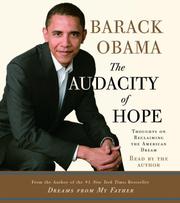
Review: The Audacity of Hope: Thoughts on Reclaiming the American Dream by Barack Obama
by Barack Obama
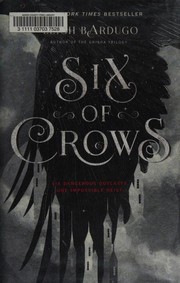
Review: Six of Crows by Leigh Bardugo
by Leigh Bardugo
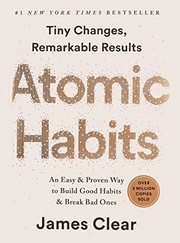
Review: Atom Habits: An Easy & Proven Way to Build Good Habits & Break Bad Ones by James Clear
by James Clear