
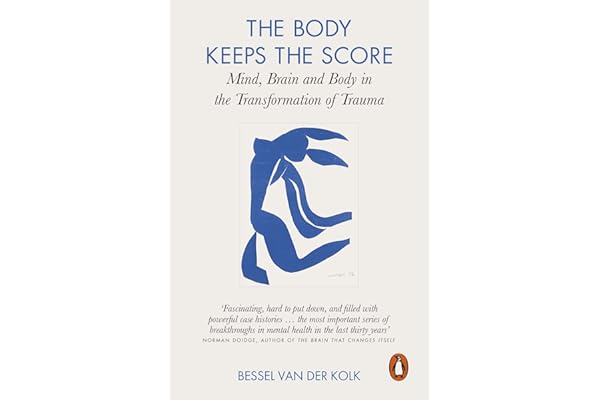
Review: The Body Keeps the Score: Brain, Mind, and Body in the Healing of Trauma by Bessel van der Kolk
In a Nutshell
Bessel van der Kolk's "The Body Keeps the Score" offers a profound, science-backed exploration of trauma's impact on the brain and body, revealing pathways to healing.
In the landscape of books that attempt to grapple with the pervasive and often invisible wounds of trauma, few have made as profound an impact as Bessel van der Kolk's "The Body Keeps the Score: Brain, Mind, and Body in the Healing of Trauma." It’s a book that doesn’t just explain trauma; it invites you to feel its echoes in your own life and to understand its deep, physiological imprint. Van der Kolk, a psychiatrist and leading expert in the field, presents a paradigm-shifting view of trauma, moving beyond the purely psychological to reveal how it fundamentally reshapes our brains and bodies, often in ways that persist long after the traumatic event has passed. This is not a self-help manual in the traditional sense, but rather an in-depth exploration of how the body, in its silent wisdom, remembers and reacts to experiences that the conscious mind may struggle to process.
At its core, "The Body Keeps the Score" is an exploration of the science behind trauma and, more importantly, the pathways to healing. Van der Kolk meticulously details how traumatic experiences—whether from childhood abuse, combat, or other deeply distressing events—can lead to complex changes in the brain's structure and function. He introduces readers to concepts like the autonomic nervous system's response to threat, the role of the amygdala and hippocampus, and the ways in which trauma can disrupt our sense of self, our relationships, and our ability to live in the present moment. The book delves into various therapeutic modalities, from EMDR and yoga to neurofeedback and psychomotor therapy, presenting them not as panaceas, but as potential avenues for reconnecting the mind and body and reclaiming a sense of safety and agency. It’s a dense, scientifically rich work, yet it is woven with compelling patient stories that illustrate the profound impact of trauma and the hope offered by effective treatment.
What elevates this book beyond a mere academic treatise is van der Kolk's masterful ability to translate complex neuroscience into accessible, and often deeply moving, prose. He doesn’t shy away from the harrowing nature of his subject matter, but he approaches it with a profound sense of compassion and respect for the resilience of the human spirit. The case studies are particularly powerful; they are not presented sensationally, but with a careful observation that highlights the intricate interplay between lived experience, physiological response, and the journey toward recovery. I found myself frequently pausing, not just to absorb the scientific explanations, but to reflect on the sheer tenacity of the individuals whose stories are shared. His ability to synthesize decades of research from various fields—psychology, neuroscience, sociology, and even anthropology—into a cohesive and compelling narrative is nothing short of remarkable. It’s a book that feels both encyclopedic in its scope and deeply personal in its impact, reminiscent of the way Oliver Sacks could illuminate the human condition through the lens of neurological diversity.
Furthermore, van der Kolk’s willingness to challenge established norms within the mental health field is a significant strength. He critiques traditional talk therapy when it fails to address the body's deep-seated responses to trauma, advocating for approaches that engage the whole person. This critical perspective, while potentially controversial for some, is essential for driving progress and ensuring that treatment evolves to meet the complex needs of trauma survivors. He champions the idea that healing is not solely about understanding what happened, but about learning to regulate the body’s alarm system and to feel safe in one's own skin. This emphasis on embodied healing offers a crucial and often overlooked dimension to trauma recovery, providing a more holistic and potentially more effective framework for understanding and treating its lasting effects.
While "The Body Keeps the Score" is an undeniable tour de force, there are moments where its sheer density might present a challenge to some readers. The extensive scientific explanations, though vital to van der Kolk's argument, occasionally slow the narrative pace, particularly in the middle sections of the book. For readers less familiar with neurological concepts, some chapters might require a more deliberate reading pace and perhaps a willingness to revisit certain passages. Additionally, while the book explores a wide array of therapeutic interventions, the detailed descriptions of each might leave some wishing for a more explicit, step-by-step guide to navigating these options, though this would undoubtedly shift the book's focus away from its broader scientific and theoretical aims. These are minor critiques, however, in the face of the book's overall illuminating power.
Ultimately, "The Body Keeps the Score" is an essential, transformative work that belongs on the bookshelf of anyone seeking to understand the profound and lasting impact of trauma. It is a testament to the intricate connection between our minds and bodies, offering both a rigorous scientific framework and a deeply humanistic perspective on healing. Van der Kolk provides not just knowledge, but a profound sense of hope, demonstrating that even the deepest wounds can be healed. Readers will walk away with a fundamentally altered understanding of themselves and others, armed with insights that can foster greater empathy, resilience, and well-being. This is more than a book; it's a roadmap to reclaiming one's life from the lingering grip of the past.
More Reviews

Review: The Audacity of Hope: Thoughts on Reclaiming the American Dream by Barack Obama
by Barack Obama

Review: Six of Crows by Leigh Bardugo
by Leigh Bardugo
Review: Atom Habits: An Easy & Proven Way to Build Good Habits & Break Bad Ones by James Clear
by James Clear