
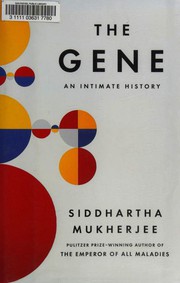
Review: The Gene: An Intimate History by Siddhartha Mukherjee
In a Nutshell
Siddhartha Mukherjee's "The Gene" masterfully chronicles the history and ethical implications of genetics, weaving science and humanity into a compelling narrative.
Siddhartha Mukherjee’s "The Gene: An Intimate History" doesn't just recount the story of genetics; it *unspools* it, weaving a narrative as intricate and vital as the double helix itself. To read this book is to embark on a profound journey through humanity's quest to understand its very blueprint, a quest fraught with both triumphant discovery and devastating ethical quandaries. It’s a sweeping, ambitious undertaking that solidifies Mukherjee’s reputation as one of our finest scientific storytellers.
At its core, "The Gene" is a history of heredity, tracing the concept from ancient Gregor Mendel's pea plants to the complex molecular biology of the 21st century. Mukherjee, a physician and Pulitzer Prize-winning author, masterfully situates the scientific breakthroughs within their historical and cultural contexts. He introduces us to the key players – Mendel, Morgan, Watson, Crick, Franklin, and many more – not as distant icons, but as fallible, driven humans grappling with the implications of their work. The book delves into the scientific mechanisms of genes, explaining concepts like DNA, chromosomes, and inheritance with remarkable clarity, but its true power lies in its exploration of how this knowledge has shaped, and continues to shape, our understanding of ourselves, our families, and our society.
What works beautifully in "The Gene" is Mukherjee's unparalleled ability to translate complex scientific ideas into accessible, compelling prose. He possesses a rare gift for analogy and metaphor, making concepts that could easily become dense and impenetrable sing with clarity. For instance, his description of the gene as a "story" or a "language" is not merely a stylistic flourish but a deeply insightful way to frame our evolving understanding of genetic function. He moves seamlessly between the micro (the molecular dance within a cell) and the macro (the societal impact of genetic discoveries), never losing sight of the human element. The narrative is punctuated by deeply personal anecdotes and historical vignettes that bring the science to life, making the abstract tangible and the past immediate. It reminded me at times of Oliver Sacks's ability to blend scientific rigor with profound human empathy, though Mukherjee’s scope is far broader.
Furthermore, Mukherjee’s exploration of the ethical dimensions of genetics is particularly strong. He doesn't shy away from the dark chapters of genetic history, such as eugenics, nor does he offer easy answers to the moral dilemmas presented by gene editing, genetic predisposition to disease, or the potential for genetic discrimination. Instead, he presents these complex issues with a nuanced and sobering perspective, urging readers to consider the profound responsibility that comes with our growing power over the building blocks of life. His own family history, interwoven throughout the narrative, adds a layer of profound personal reflection, grounding the grand scientific sweep in the intimate reality of human experience. This personal touch elevates the book beyond a mere textbook, imbuing it with a powerful emotional resonance.
If there is a place where "The Gene" could be stronger, it might be in the sheer density of information. While Mukherjee’s prose is exceptionally clear, the breadth of topics covered is immense. At times, particularly in the middle sections detailing specific molecular mechanisms or the history of various genetic disorders, the narrative momentum can feel slightly bogged down by the weight of detail. While each piece of information is valuable, a reader less familiar with biological concepts might find themselves occasionally needing to pause and re-read to fully absorb the material. This is less a flaw in the writing and more an inherent challenge of tackling such a vast and intricate subject, but a slightly tighter focus in certain chapters might have enhanced the overall flow for a broader audience.
Despite this minor point, "The Gene: An Intimate History" is a monumental achievement. It is a book that manages to be both a definitive history of a pivotal scientific field and a deeply moving meditation on what it means to be human. Mukherjee equips readers with the knowledge to understand the genetic revolution unfolding around us, while simultaneously prompting crucial ethical reflection. It is essential reading for anyone seeking to grasp the science that defines us and the profound implications it holds for our future. Readers will close this book with a newfound appreciation for the intricate dance of inheritance and a sober understanding of the power and responsibility that comes with unlocking the secrets of the gene. It is, quite simply, a triumph of scientific literature that will resonate long after the final page is turned.
More Reviews

Review: The Audacity of Hope: Thoughts on Reclaiming the American Dream by Barack Obama
by Barack Obama

Review: Six of Crows by Leigh Bardugo
by Leigh Bardugo

Review: Atom Habits: An Easy & Proven Way to Build Good Habits & Break Bad Ones by James Clear
by James Clear