
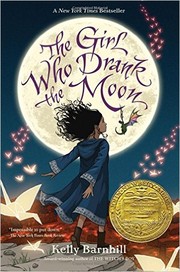
Review: The Girl Who Drank the Moon by Kelly Barnhill
In a Nutshell
A kind witch rescues abandoned babies, but one girl's magic threatens to expose a village's dark secret and change their world forever.
In the quiet, mist-shrouded village of Hallow, a dark tradition festers: the abandonment of a baby every year to the witch in the forest. This sacrifice, born of fear and a desperate attempt to appease an unknown evil, has become so ingrained that the villagers no longer question its necessity. But the witch, Xan, is no malevolent sorceress. Instead, she is a lonely, kind-hearted woman who rescues these abandoned infants, feeding them moonlight and love, and finding them loving families. Her latest rescue, a baby girl named Luna, begins to exhibit a different kind of magic, one that is not a gift but a burden, a wild, untamed power that threatens to consume her and everyone she holds dear.
What works beautifully in Kelly Barnhill's "The Girl Who Drank the Moon" is its masterful subversion of fairy tale tropes. Xan, the witch, is not the cackling villain of common lore but a figure of profound compassion and quiet sorrow, her isolation a mirror to the villagers' own self-imposed fear. The narrative unfolds with a beguiling, almost lyrical quality, reminiscent of classic fairy tales yet imbued with a modern sensibility. Barnhill's prose is exquisite, painting vivid images of the enchanted forest, the suffocating village, and the burgeoning magic within Luna. The story's strength lies in its exploration of love, fear, and the stories we tell ourselves to make sense of the world. It delves into how easily fear can breed cruelty and how profound love can be found in the most unexpected places, echoing the thematic depth found in the works of authors like Ursula K. Le Guin, who also masterfully blended folklore with profound human insight.
The characters are drawn with such tenderness and complexity that they feel achingly real, even amidst the fantastical elements. Luna's journey from a magically-afflicted infant to a young woman grappling with her own power is compelling. Glerk, the dragon, and Fyrian, the tiny enchanter, are not mere sidekicks but integral parts of Xan's unconventional family, each contributing to the rich tapestry of their shared lives. Their interactions are filled with humor and genuine affection, providing moments of levity that balance the story's darker undertones. Barnhill excels at showing, not telling, the emotional beats of the story. The quiet moments of connection between Xan and Luna, the unspoken understanding between Glerk and Fyrian, and the slow dawning of realization in the hearts of those who have long lived in fear are depicted with a subtlety that allows the reader to feel the weight of each emotion.
Where the book could be stronger is perhaps in its pacing during the middle sections. While the deliberate unfolding of the backstory is crucial to understanding the motivations of the characters and the origins of the village's fear, there are moments where the narrative momentum slackens slightly. The intricate web of prophecies and ancient magic, while intriguing, occasionally feels a touch overstuffed, threatening to overshadow the more intimate character development. A tighter focus in these sections might have further amplified the emotional impact of the climax, allowing the various plot threads to converge with even greater force.
Furthermore, while the resolution to the central conflict is satisfying in its thematic resonance, some of the secondary plotlines feel a bit too neatly tied up. The transformation of the village, while hopeful, happens perhaps a little too swiftly after centuries of deeply ingrained fear. A more gradual shift or a lingering sense of unease might have added another layer of realism to the ending, even within a fantasy context. However, these are minor quibbles in an otherwise beautifully crafted tale.
"The Girl Who Drank the Moon" is a luminous exploration of how love can overcome fear and how the stories we inherit can be rewritten. It's a book that reminds us of the power of empathy and the courage it takes to challenge deeply rooted traditions. Readers will find themselves enchanted by its lyrical prose, its unforgettable characters, and its profound message of hope. This is a fairy tale for the modern age, one that will linger in your thoughts long after the final page is turned, much like a half-remembered dream.
More Reviews

Review: The Audacity of Hope: Thoughts on Reclaiming the American Dream by Barack Obama
by Barack Obama
Review: Six of Crows by Leigh Bardugo
by Leigh Bardugo

Review: Atom Habits: An Easy & Proven Way to Build Good Habits & Break Bad Ones by James Clear
by James Clear