

Review: The Restaurant at the End of the Universe by Douglas Adams
In a Nutshell
Douglas Adams's "Restaurant at the End of the Universe" blends cosmic absurdity with profound wit, offering a hilarious and thought-provoking journey through space and time.
The universe, as Douglas Adams presents it, is a place of infinite absurdity, a cosmic joke where the most profound questions are answered with the most ludicrous non-sequiturs. His enduring legacy, cemented by works like "The Restaurant at the End of the Universe," is his unparalleled ability to find profound truth nestled within utter silliness. It’s a book that reminds us that perhaps the best way to grapple with the vast, unknowable expanse of existence is not with solemnity, but with a hearty laugh and a towel.
"The Restaurant at the End of the Universe," the second installment in the Hitchhiker's Guide to the Galaxy series, plunges Arthur Dent and his alien companions into a whirlwind tour of cosmic oddities just as Earth is unceremoniously demolished. Their journey leads them to the titular restaurant, a marvel of temporal engineering where patrons dine at the end of time itself, witnessing the final moments of the universe. It’s a premise that, in lesser hands, could collapse under its own weight, but Adams, with his characteristic wit, uses it as a springboard for a series of hilarious, thought-provoking, and often surprisingly poignant adventures. We encounter new characters, revisit old favorites, and delve deeper into the bizarre mechanics of Adams's universe, all while grappling with the fundamental question of what it means to be a lost human in an infinitely strange galaxy.
What truly elevates this novel, much like its predecessor, is Adams's masterful prose. His sentences are a delight, capable of shifting from the utterly mundane to the spectacularly cosmic in a single breath. He possesses a unique gift for the perfectly placed adjective, the absurdly specific detail that makes his creations feel both alien and remarkably relatable. The descriptions of the restaurant itself, from its spectacular view of the universe’s demise to the peculiar culinary offerings (including the infamous "Nutrimatic Drink Dispenser" that produces a drink that is "almost, but not quite, entirely unlike tea"), are prime examples of this. His humor isn't just about punchlines; it’s woven into the fabric of the narrative, a dry, observational wit that permeates every alien encounter and every bizarre technological marvel. It’s a style that feels both deeply intellectual and riotously funny, a rare combination that few authors achieve. The philosophical underpinnings, exploring themes of destiny, free will, and the search for meaning in a chaotic existence, are never heavy-handed but rather emerge organically from the characters' predicaments, much like the surprisingly profound observations that often punctuate the narrative.
Adams’s characters, while often caricatures, are imbued with enough humanity to anchor the reader. Arthur Dent remains the quintessential bewildered everyman, his mundane concerns and exasperation a perfect foil to the cosmic madness surrounding him. Ford Prefect’s nonchalant acceptance of the universe’s strangeness, Zaphod Beeblebrox’s ego-driven chaos, and Trillian’s pragmatic intelligence all contribute to a dynamic ensemble. I found myself particularly appreciating the subtle development of Arthur's character, his gradual, albeit reluctant, adaptation to the wider universe. The pacing, for the most part, is excellent, propelling the reader forward with a series of escalating absurdities that keep the pages turning. The narrative rarely outstays its welcome, each vignette serving a purpose in building the overall tapestry of the story. It’s this blend of high-concept science fiction and down-to-earth character moments that makes the series so enduring.
However, "The Restaurant at the End of the Universe" isn't without its minor stumbles. While the episodic nature of the Hitchhiker's series is part of its charm, there are moments, particularly in the middle section, where the narrative feels slightly less focused. The introduction of certain plot threads, while entertaining, don't always feel as tightly integrated into the main thrust of the story as they could be. For instance, the protracted subplot involving the two astrophysicists trying to prove the existence of the restaurant feels a little like a detour, more of a comedic set-piece than an essential narrative component. While I thoroughly enjoyed the intellectual playfulness of the premise, a slightly more cohesive structure in certain sections might have enhanced the overall impact of the journey. It is a testament to Adams's skill that these are minor quibbles in an otherwise brilliant work; they merely suggest areas where the already impressive edifice could have been even more robust.
Ultimately, "The Restaurant at the End of the Universe" is a triumphant return to the cosmos, a book that defies easy categorization and delights at every turn. It’s a testament to the power of humor as a vehicle for exploring life's biggest questions. For readers who appreciate witty satire, imaginative world-building, and a healthy dose of existential absurdity, this book is an absolute must-read. It’s a reminder that sometimes, the most profound insights come from the most unexpected, and often the most ridiculous, places. Adams invites us to laugh at the universe, and in doing so, helps us understand it a little better. Readers will walk away with a renewed appreciation for the sheer, glorious madness of it all, and perhaps a sudden craving for a pan-galactic gargle blaster.
More Reviews
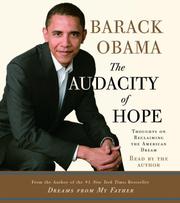
Review: The Audacity of Hope: Thoughts on Reclaiming the American Dream by Barack Obama
by Barack Obama
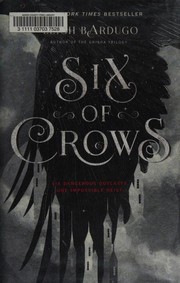
Review: Six of Crows by Leigh Bardugo
by Leigh Bardugo
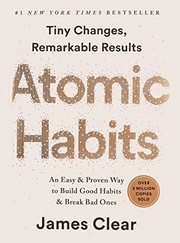
Review: Atom Habits: An Easy & Proven Way to Build Good Habits & Break Bad Ones by James Clear
by James Clear