
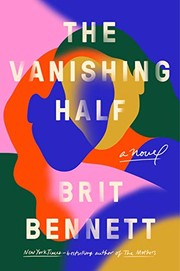
Review: The Vanishing Half by Brit Bennett
In a Nutshell
Brit Bennett's 'The Vanishing Half' is a captivating exploration of race, identity, and family ties through the story of twin sisters who choose vastly different lives.
The twin sisters, Stella and Desiree Vignes, emerge from the fictional town of Mallard, Louisiana, a place founded on the ideal of light skin. Their departure from this suffocating environment sets in motion a narrative that is as much about the choices we make as it is about the heritage we can never truly escape. Brit Bennett’s "The Vanishing Half" is a profound exploration of identity, race, and the performance of self in a world that constantly seeks to categorize us. It’s a novel that lingers long after the final page, prompting introspection on the invisible threads that bind us to our past and the imagined futures we strive to build.
At its heart, the novel follows Stella and Desiree, identical twins who choose vastly different paths. Desiree marries young and flees back to Mallard, her life shaped by the familiar weight of her origins. Stella, on the other hand, makes a more radical choice: she disappears, passing for white in a Los Angeles that offers both anonymity and opportunity. Her decision to sever ties with her past, including her own family, creates a rift that defines the lives of not only herself but also her daughter, Kennedy, and Desiree’s daughter, Jude. The narrative gracefully weaves between their lives, exploring the consequences of Stella’s choice and the ripple effects across generations.
Bennett’s prose is a masterclass in understated power. She possesses a remarkable ability to capture the complexities of human emotion with lyrical precision. The characters, particularly Stella and Desiree, are rendered with such depth and nuance that they feel achingly real. We understand Stella’s desperate yearning for a life unburdened by the racial strictures of her upbringing, even as we grapple with the profound betrayal inherent in her decision. Similarly, Desiree's resilience and her longing for connection are palpable. Bennett doesn't shy away from the moral ambiguities of her characters' lives, allowing them to exist in the gray spaces, which makes their journeys all the more compelling. The novel’s structure, shifting perspectives and timelines, mirrors the fragmented nature of memory and identity, drawing the reader further into the characters’ internal worlds. It reminded me, in its thematic concerns and its handling of generational trauma, of Toni Morrison's "Beloved," though Bennett carves out her own distinct territory.
Where "The Vanishing Half" occasionally falters is in the pacing of its latter half. While the intricate tapestry of the characters' lives is compelling, certain plot points, particularly concerning Kennedy's artistic aspirations and her eventual connection to her mother's past, feel somewhat rushed. The resolution of some relationships, while emotionally satisfying, could have benefited from more space to breathe, allowing the characters' transformations to feel less accelerated. The exploration of the Black community in Los Angeles, while present, could also have been expanded upon to provide even richer context for Stella's choices and the world she inhabits. These are minor quibbles, however, in an otherwise masterfully crafted novel.
Despite these small critiques, "The Vanishing Half" is a triumph of literary fiction. Bennett has penned a story that is both timely and timeless, posing urgent questions about race, class, and the construction of identity in America. It’s a novel that insists on the complexity of its characters, refusing easy answers or simplistic judgments. Readers will be captivated by the intricate family saga, the beautifully rendered prose, and the profound emotional resonance. It is a book that compels us to consider the selves we present to the world and the enduring power of the ties that bind us, no matter how far we run. Bennett leaves us with a potent reminder that while we may strive to escape our past, its echoes inevitably shape our future.
This novel is perfect for readers who appreciate character-driven literary fiction that tackles significant social themes with grace and intelligence. You will walk away with a deeper understanding of the multifaceted nature of identity and the enduring quest for belonging. Brit Bennett solidifies her place as a vital voice in contemporary literature, offering a story that is both heartbreaking and hopeful.
More Reviews
Review: The Audacity of Hope: Thoughts on Reclaiming the American Dream by Barack Obama
by Barack Obama
Review: Six of Crows by Leigh Bardugo
by Leigh Bardugo
Review: Atom Habits: An Easy & Proven Way to Build Good Habits & Break Bad Ones by James Clear
by James Clear