
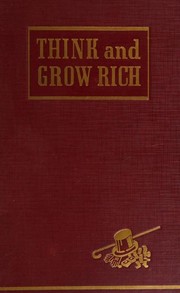
Review: Think and Grow Rich by Napoleon Hill
In a Nutshell
Napoleon Hill's classic offers timeless principles on mindset and desire for achieving success, though its advice requires modern interpretation.
"The only limit to our realization of tomorrow will be our doubts of today." This potent assertion, plucked from the pages of Napoleon Hill's enduring classic, "Think and Grow Rich," serves as a stark invitation to confront the internal architects of our own limitations. Published in 1937, amidst the lingering shadows of the Great Depression, Hill's work emerged not merely as a self-help manual, but as a philosophical treatise on the power of the human mind to shape destiny. It's a book that has, for generations, promised a roadmap to success, wealth, and personal fulfillment, a promise it woefully, yet compellingly, attempts to deliver.
At its core, "Think and Grow Rich" is an exploration of the thirteen principles Hill identified as crucial for achieving extraordinary success. These aren't simply abstract concepts; Hill frames them as actionable steps, derived from his extensive interviews with titans of industry like Andrew Carnegie, Henry Ford, and Thomas Edison. He posits that wealth and achievement are not accidental but are the direct result of a specific mental attitude — a burning desire, unwavering faith, and a well-defined purpose, coupled with persistent action and the ability to organize and direct one's thoughts. The book delves into the alchemy of turning abstract desires into tangible realities, urging readers to cultivate a "master mind" and harness the power of autosuggestion, specialized knowledge, and imagination.
What resonates most profoundly, and perhaps explains the book's near-mythic status, is its unyielding optimism and its emphasis on the internal locus of control. Hill doesn't shy away from the idea that true wealth begins within. His prose, while occasionally dated, often crackles with an almost evangelical fervor. He masterfully interweaves anecdotal evidence of his subjects' triumphs with practical advice, making the seemingly insurmountable feel achievable. The concept of the "master mind," the synergistic collaboration of two or more minds for the purpose of achieving a definite plan, is particularly compelling. I found myself particularly struck by the chapter on the "seven fears" that plague so many, a raw and honest confrontation with the psychological barriers that so often sabotage our best intentions. It's a testament to Hill's insight that these fears — poverty, criticism, ill health, loss of love, old age, and death — remain remarkably relevant today.
However, to praise "Think and Grow Rich" without reservation would be to overlook its significant shortcomings. The book's historical context, while providing a unique window into early 20th-century American ambition, also imbues it with a certain naivete. The economic landscape and societal structures of today are vastly different, and Hill's often simplistic approach to wealth accumulation can feel out of step with contemporary realities. While he acknowledges external factors, his primary focus on mindset occasionally borders on victim-blaming, implying that failure is solely a consequence of insufficient desire or faith. Furthermore, the repetition of core principles across chapters can, at times, feel redundant rather than reinforcing. Some readers might also find the reliance on anecdotal evidence, without rigorous empirical backing, to be a weakness. The book, for all its motivational power, lacks the structured, evidence-based approach found in more modern psychological literature, such as Carol Dweck's "Mindset."
Ultimately, "Think and Grow Rich" is less a literal blueprint for financial success and more a powerful manual for cultivating a success-oriented mindset. It's a book that demands active engagement — not just reading, but doing. Its enduring appeal lies in its fundamental truth: that our beliefs and attitudes are potent forces that can either propel us forward or hold us captive. While its advice may require modern interpretation and supplementation, its core message about the transformative power of a focused, determined mind remains a vital, if sometimes challenging, truth. Readers seeking a jolt of inspiration and a renewed belief in their own potential will find it here, but those looking for a step-by-step financial guide might need to look elsewhere. Hill offers the fuel for the journey, but the map, in today's complex world, is still largely ours to draw.
More Reviews
Review: The Audacity of Hope: Thoughts on Reclaiming the American Dream by Barack Obama
by Barack Obama

Review: Six of Crows by Leigh Bardugo
by Leigh Bardugo
Review: Atom Habits: An Easy & Proven Way to Build Good Habits & Break Bad Ones by James Clear
by James Clear