

Review: A Brief History of Time by Stephen Hawking
In a Nutshell
Stephen Hawking's "A Brief History of Time" demystifies the universe's grandest theories, from the Big Bang to black holes, with remarkable clarity and intellectual depth.
Stephen Hawking, a mind that dared to grapple with the universe's grandest questions, gifted us "A Brief History of Time," a book that has become as iconic as the physicist himself. It’s a testament to human curiosity, an invitation to peer into the cosmic abyss and find, not just terror, but a profound, almost poetic order. This isn't just a science book; it's a philosophical journey wrapped in equations, a daring exploration of where we came from and where we might be going.
At its core, "A Brief History of Time" is an ambitious attempt to explain the fundamental nature of the universe to a lay audience. Hawking guides us through concepts like the Big Bang, black holes, the curvature of spacetime, and the elusive quest for a unified theory that would reconcile quantum mechanics with general relativity. It’s a narrative of discovery, tracing the evolution of our understanding of the cosmos from ancient Greek philosophers to the cutting edge of theoretical physics. The book doesn't shy away from the complexity, but its strength lies in Hawking's persistent effort to make the unfathomable accessible, using analogies and clear, albeit challenging, explanations.
What truly elevates this book beyond a mere textbook is Hawking's remarkable prose. Despite the daunting subject matter, his voice is remarkably engaging, imbued with a quiet determination and an infectious enthusiasm for his subject. He possesses a rare gift for distilling incredibly complex ideas into digestible nuggets of understanding. For instance, his descriptions of spacetime as a fabric, or the analogy of a particle in a box to explain quantum uncertainty, resonate long after the page is turned. He masterfully builds a scaffolding of understanding, layer by layer, allowing the reader to gradually ascend towards comprehending concepts that might otherwise remain impenetrable. I found myself rereading passages not out of confusion, but out of admiration for the clarity achieved in explaining something so inherently abstract. It’s akin to reading Carl Sagan’s "Cosmos" but with a sharper focus on the theoretical underpinnings of cosmology.
Furthermore, the book’s thematic depth is immense. Hawking grapples with philosophical implications, touching upon the existence of God and the nature of time itself, not as dogmatic pronouncements, but as natural extensions of scientific inquiry. He poses questions that have occupied thinkers for millennia, framing them within the context of modern physics. This intellectual daring, the courage to bridge the gap between the empirical and the existential, is a significant part of the book's enduring appeal. It encourages a sense of wonder, reminding us of our place in a vast, mysterious, and incredibly ordered universe.
However, "A Brief History of Time" is not without its challenges. While Hawking strives for accessibility, there are moments where the sheer density of information and the reliance on abstract concepts can feel overwhelming. Certain sections, particularly those delving deeply into quantum mechanics and the intricacies of string theory, might require a dedicated reader willing to pause, reflect, and perhaps consult external resources. The narrative, while driven by intellectual curiosity, can sometimes feel more like a guided tour of scientific ideas than a tightly plotted story, which might leave some readers yearning for more personal narrative or a stronger sense of character development, though admittedly, that’s not the book’s primary aim.
Ultimately, "A Brief History of Time" is an extraordinary achievement – a landmark in popular science that has inspired countless minds to look up at the stars with a deeper understanding and a renewed sense of awe. It’s a book that doesn't just inform; it expands one's perception of reality. While it demands intellectual effort, the rewards are immeasurable: a glimpse into the universe's most profound secrets, articulated with a clarity and elegance that only a true visionary could provide. Readers will leave with a humbling, exhilarating appreciation for the cosmos and the ongoing human quest to comprehend it, a quest that Hawking himself so brilliantly embodied. It’s a book that truly makes you feel smarter, and more importantly, makes you feel the wonder of existence.
More Reviews

Review: The Audacity of Hope: Thoughts on Reclaiming the American Dream by Barack Obama
by Barack Obama
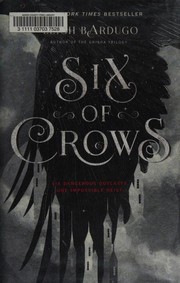
Review: Six of Crows by Leigh Bardugo
by Leigh Bardugo
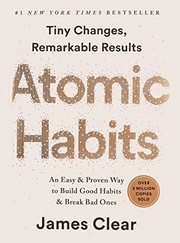
Review: Atom Habits: An Easy & Proven Way to Build Good Habits & Break Bad Ones by James Clear
by James Clear