
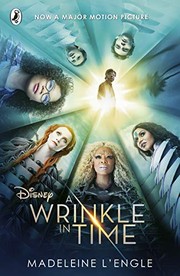
Review: A Wrinkle in Time by Madeleine L'Engle
In a Nutshell
A cosmic adventure exploring conformity, individuality, and the power of love against darkness.
Few children's novels have dared to grapple with the abstract concepts of good and evil, faith and doubt, or the very nature of identity with the intellectual rigor and emotional resonance of Madeleine L'Engle's "A Wrinkle in Time." It is a story that doesn't shy away from the darkness, but firmly believes in the power of love and courage to illuminate it, a sentiment that feels as vital today as it did upon its publication.
At its core, "A Wrinkle in Time" is the story of Meg Murry, a bright but awkward adolescent struggling with insecurities and a sense of not belonging. Her life, along with that of her precocious younger brother Charles Wallace and their friend Calvin O'Keefe, is upended when a mysterious trio of celestial beings—Mrs. Whatsit, Mrs. Who, and Mrs. Which—appear to enlist them on a perilous journey across time and space. Their mission: to rescue Meg's scientist father from a malevolent force known as the Dark Thing, which is engulfing the galaxy. What follows is not merely an adventure but a profound exploration of the universe, both outer and inner, and the fierce power of embracing one's own unique qualities.
What works so beautifully in L'Engle's masterpiece is its fearless intellectual curiosity woven into a genuinely gripping narrative. The prose itself possesses a certain elegant simplicity, capable of conjuring awe-inspiring cosmic vistas alongside the intensely personal turmoil of its young protagonists. Meg, in particular, is a triumph of characterization. She is not a perfect heroine; her anger, her self-doubt, her fierce protectiveness of her family are all laid bare. This vulnerability makes her eventual courage all the more potent. L'Engle understands that true bravery isn't the absence of fear, but the willingness to act in spite of it. The introduction of Mrs. Whatsit, Mrs. Who, and Mrs. Which is masterfully done, providing both whimsical guidance and profound wisdom, often through surprisingly accessible aphorisms and literary allusions. The concept of the tesseract, the wrinkle in time, is not just a plot device but a tangible metaphor for overcoming limitations, for seeing beyond the ordinary.
Furthermore, the thematic depth is astonishing. L'Engle deftly explores the dangers of conformity, the insidious nature of fear, and the transformative power of love. The planet Camazotz, with its chillingly perfect synchronicity and suppressed individuality, serves as a stark warning against blind obedience and the eradication of uniqueness. The contrast between the cold, calculated uniformity of the 'It' and the messy, vibrant, and ultimately triumphant individuality of Meg and her companions is the novel's thematic heart. The spiritual undertones, while not overtly proselytizing, add another layer of richness, suggesting a universe guided by something far greater than mere chance or science alone, a concept that subtly echoes the philosophical inquiries found in C.S. Lewis's "Chronicles of Narnia" but with a more overtly scientific bent.
If there's a point where "A Wrinkle in Time" could perhaps be strengthened, it might be in the pacing of its final act. While the climax is undeniably powerful and emotionally charged, the resolution, particularly the direct confrontation with the Dark Thing, can feel a touch more abstract than the concrete challenges faced on other planets. The reliance on Meg's internal strength to overcome such an immense, cosmic evil, while thematically consistent and profound, might leave some readers yearning for a slightly more tangible battle of wills or actions on a grander scale. However, this is a minor quibble in a novel that otherwise masterfully balances high-concept science fiction with deeply human drama. It's a testament to L'Engle's skill that even this potentially perceived weakness serves to underscore the novel's core message about the power residing within the individual.
Ultimately, "A Wrinkle in Time" remains an enduring testament to the enduring power of imagination and the courage to embrace one's own peculiar light. It is a book that doesn't offer easy answers but encourages brave questions, a journey that leaves its readers with a profound sense of wonder and a quiet certainty that even in the face of overwhelming darkness, love and individuality can always find a way to triumph. This is a novel that doesn't just entertain; it changes the way you see the universe, and yourself within it, forever.
A cosmic adventure exploring conformity, individuality, and the power of love against darkness.
More Reviews
Review: The Audacity of Hope: Thoughts on Reclaiming the American Dream by Barack Obama
by Barack Obama
Review: Six of Crows by Leigh Bardugo
by Leigh Bardugo
Review: Atom Habits: An Easy & Proven Way to Build Good Habits & Break Bad Ones by James Clear
by James Clear