
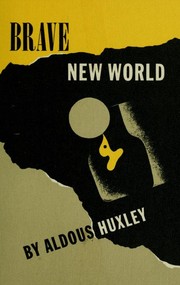
Review: Brave New World by Aldous Huxley
In a Nutshell
Huxley's 'Brave New World' critiques a future society where stability and happiness are manufactured, sacrificing individuality for engineered contentment.
Aldous Huxley’s *Brave New World* offers a chilling glimpse into a future where happiness is manufactured, individuality is sacrificed for stability, and the pursuit of pleasure trumps all else. It’s a world where we are, in essence, conditioned to love our servitude, a terrifying concept that resonates with an unnerving prescience even today.
At its core, *Brave New World* presents a society engineered for absolute contentment. From conception, citizens are predestined into social castes, each biologically and psychologically conditioned to fulfill specific roles. This World State, as it's called, has eradicated disease, poverty, and war, but at the cost of genuine human connection, art, religion, and freedom. The narrative largely follows Bernard Marx, an Alpha-Plus psychologist who feels a persistent sense of unease and alienation within this meticulously constructed utopia, and Lenina Crowne, a Beta who embodies the prevalent conditioning, though with occasional flickers of what might be deeper feelings. Their journey takes them to one of the few remaining “Savage Reservations,” where a semblance of the old world persists, introducing them to John, a young man raised on Shakespeare and the raw, untamed emotions of a life the World State has deemed obsolete.
What strikes me most forcefully about *Brave New World* is its masterful exploration of social control through pleasure and distraction. Huxley doesn't present a brutal totalitarian regime; instead, he paints a picture of a society willingly enslaved by its own comfort. The ubiquitous use of the drug Soma, the endless sexual promiscuity encouraged from childhood, and the constant barrage of sensory entertainment all serve to numb any potential for discontent. The prose itself is remarkably precise and often darkly humorous, reflecting the sterile, almost clinical nature of the society it depicts. Huxley’s ability to create distinct, albeit often flawed, characters like Bernard, whose intellectual dissatisfaction is palpable, and Helmholtz Watson, the gifted writer stifled by the lack of genuine artistic expression, is exceptional. The juxtaposition of this engineered world with the raw, passionate, and often brutal reality of John the Savage provides the novel's most potent dramatic tension, forcing readers to confront uncomfortable questions about what it truly means to be human.
However, while the novel’s thematic core is undeniably powerful, I found the pacing in the middle section, particularly during Bernard and Lenina’s time on the Reservation, to be somewhat uneven. The introduction of John, while crucial, feels like a necessary exposition dump, and some of the philosophical debates that follow, while important, occasionally veer towards didacticism. The characters of John, in particular, though representing the antithesis of the World State, can sometimes feel more like a mouthpiece for Huxley’s critiques than fully realized individuals with their own internal complexities. While his emotional outbursts are compelling, they occasionally lack the nuanced development I might have expected from a protagonist, even one so profoundly isolated.
Ultimately, *Brave New World* remains a prescient and profoundly unsettling masterpiece. It’s a book that doesn’t offer easy answers but instead compels us to ask difficult questions about the price of progress and the seductive nature of artificial happiness. Readers who appreciate dystopian literature that delves into the philosophical underpinnings of societal control, akin to the intellectual rigor found in works by George Orwell or even the subtle societal critiques of E.M. Forster, will find themselves deeply engaged. You’ll finish it not with a sense of dread, but with a quiet, persistent hum of unease, a testament to Huxley’s enduring vision of a world that might just be a little too perfect.
More Reviews
Review: The Audacity of Hope: Thoughts on Reclaiming the American Dream by Barack Obama
by Barack Obama
Review: Six of Crows by Leigh Bardugo
by Leigh Bardugo
Review: Atom Habits: An Easy & Proven Way to Build Good Habits & Break Bad Ones by James Clear
by James Clear