

Review: Caste: The Origins of Our Discontents by Isabel Wilkerson
In a Nutshell
Isabel Wilkerson's "Caste" reframes American inequality as a deeply rooted caste system, revealing its pervasive influence on society through history and personal narratives.
Isabel Wilkerson’s “Caste: The Origins of Our Discontents” doesn’t just dissect American racism; it boldly reframes it, insisting we must look beyond the binary of Black and white and confront the deeper, more insidious architecture that has shaped our society. This is a book that demands a reckoning, a profound re-examination of the invisible scaffolding that has long supported our social order, a scaffolding Wilkerson argues is fundamentally rooted in caste.
At its core, Wilkerson’s monumental work posits that the United States, much like India and Nazi Germany, operates under a hierarchical caste system. She meticulously traces the historical evolution of this system, arguing that it predates even the institution of slavery and has continuously adapted to maintain racial stratification. Through vivid storytelling and rigorous sociological analysis, she illustrates how this invisible framework influences everything from housing patterns and economic opportunities to personal relationships and even our understanding of self. She doesn’t just present data; she weaves together personal narratives and historical accounts to create a compelling, often gut-wrenching, tapestry of lived experience under caste.
What truly elevates “Caste” is Wilkerson’s extraordinary prose. She wields language with the precision of a surgeon and the lyricism of a poet. Her metaphors are breathtakingly original and deeply illuminating, such as comparing caste to the invisible threads of a spiderweb that ensnare us all, or likening it to a subterranean river that flows beneath the surface of American consciousness, silently shaping its currents. I found myself stopping frequently, not just to absorb the weight of her arguments, but to marvel at the sheer beauty of her sentences. The way she juxtaposes the plight of a low-caste Indian woman with that of an enslaved African American man, or a persecuted Jew in Nazi Germany, is masterful. She demonstrates how the underlying principles of assigning worth and determining social position through birth remain eerily consistent across these seemingly disparate systems. The book is also incredibly well-researched, drawing on a vast array of historical documents, sociological studies, and personal testimonies, yet it never feels like a dry academic treatise. It is profoundly humane, empathetic, and urgent.
While “Caste” is an undeniable triumph, there are moments where its sheer ambition might lead to a slight diffusion of focus. The extensive comparisons across different caste systems, while crucial to her argument, occasionally feel so densely packed that a reader might yearn for a deeper dive into one specific context before moving to the next. For instance, the discussion of contemporary caste in India, while vital for understanding the broader framework, could perhaps have benefited from a few more extended case studies to fully convey its pervasive impact. Similarly, while Wilkerson is an unparalleled storyteller, some of the personal anecdotes, though moving, sometimes feel like they could have been integrated more seamlessly into the broader analytical arguments rather than standing slightly apart. These are, however, minor quibbles in the face of such a profound and comprehensive achievement.
“Caste” is not a comfortable read, nor should it be. It is a challenging, revelatory, and ultimately necessary book that forces us to confront the uncomfortable truths about our own society. Wilkerson doesn’t offer easy answers, but she provides a powerful lens through which to understand the persistent inequalities that plague us. Readers will walk away with a radically altered perspective on race, class, and the very fabric of American identity, a perspective that will undoubtedly linger long after the final page. This is a book destined to reshape conversations and alter perceptions for years to come.
More Reviews
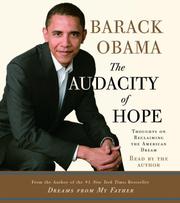
Review: The Audacity of Hope: Thoughts on Reclaiming the American Dream by Barack Obama
by Barack Obama

Review: Six of Crows by Leigh Bardugo
by Leigh Bardugo
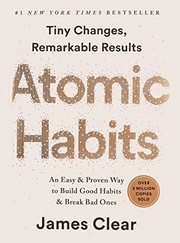
Review: Atom Habits: An Easy & Proven Way to Build Good Habits & Break Bad Ones by James Clear
by James Clear