
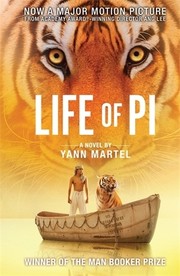
Review: Life of Pi by Yann Martel
In a Nutshell
This novel brilliantly explores faith and survival through a boy and a tiger on a lifeboat, questioning reality and the stories we choose to believe.
Yann Martel’s *Life of Pi* doesn't just tell a story; it compels you to question the very nature of storytelling, and by extension, reality itself. It's a novel that lodges itself in your consciousness, a vibrant, unsettling, and ultimately life-affirming testament to the human (and animal) will to survive.
At its heart, *Life of Pi* is the account of Piscine Molitor Patel, a young Indian boy who, after a catastrophic shipwreck, finds himself adrift on a lifeboat in the Pacific Ocean. His sole companion is a 450-pound Bengal tiger named Richard Parker. What follows is a harrowing, surreal journey of survival, faith, and the extraordinary lengths to which one must go to endure unimaginable circumstances.
What elevates *Life of Pi* beyond a simple adventure tale is its masterful blending of the fantastical with the profound. Martel's prose is exquisite, painting vivid, almost tangible images of the ocean's vastness, the blinding sun, and the silent, watchful presence of Richard Parker. The relationship between Pi and the tiger is the novel's undeniable core – a complex dance of predator and prey, fear and dependence, that evolves into something akin to a co-dependent partnership. I found myself utterly captivated by the sheer audacity of this premise, and by how Martel, through Pi's narration, makes the utterly unbelievable feel, at times, heartbreakingly plausible. The novel’s philosophical underpinnings, particularly its exploration of faith and belief, are woven in with such organic grace that they never feel preachy, but rather emerge organically from Pi's desperate situation. It’s reminiscent of the way Melville uses the whale to explore existential questions, though Martel’s approach is far more accessible and, for me, more emotionally resonant.
However, while the initial thrust of Pi's ordeal is undeniably gripping, the latter half of the novel, particularly the segments on the mysterious island, felt to me like a slight dip in momentum. While the island itself is a brilliantly conceived, unsettling marvel, the narrative seems to linger there a little too long, slowing the pacing that had been so exhilarating before. Furthermore, the framing device of an adult Pi recounting his tale to a writer, while essential to the book's ultimate thematic punch, occasionally feels a touch too self-conscious. The insistence on the reader's choice regarding the 'better' story, while intellectually stimulating, can also feel like a slight interruption to the raw emotional experience of Pi's survival.
Ultimately, *Life of Pi* is a profound and unforgettable literary achievement. It is a book that demands engagement, that challenges your assumptions, and that leaves you pondering its layers long after you've turned the final page. It’s a perfect read for anyone who appreciates stories that blur the lines between myth and reality, for those who find wonder in the resilience of the spirit, and for anyone willing to embrace a bit of glorious, necessary ambiguity. You'll close the book with a lingering question, a quiet wonder, and a deep appreciation for the stories we tell ourselves to keep going.
This novel brilliantly explores faith and survival through a boy and a tiger on a lifeboat, questioning reality and the stories we choose to believe.
More Reviews

Review: The Audacity of Hope: Thoughts on Reclaiming the American Dream by Barack Obama
by Barack Obama
Review: Six of Crows by Leigh Bardugo
by Leigh Bardugo
Review: Atom Habits: An Easy & Proven Way to Build Good Habits & Break Bad Ones by James Clear
by James Clear