

Review: Man's Search for Meaning by Viktor E. Frankl
In a Nutshell
Viktor Frankl's "Man's Search for Meaning" explores finding purpose in suffering, offering logotherapy's hope for human resilience and the freedom to choose one's attitude.
Viktor Frankl’s enduring testament, *Man's Search for Meaning*, is not merely a recounting of unimaginable suffering; it is a profound exploration of the human spirit’s capacity to transcend even the most brutal circumstances by finding purpose in them. "Everything can be taken from a man but one thing: the last of the human freedoms—to choose one’s attitude in any given set of circumstances, to choose one’s own way." This stark assertion, delivered from the ashes of a Nazi concentration camp, serves as the bedrock of a philosophy that continues to resonate decades later.
At its core, the book is bifurcated into two distinct yet interwoven parts. The first, a harrowing yet dispassionate account of Frankl’s experiences in Auschwitz and other camps, serves as the crucible for the ideas presented in the second, more theoretical section. Here, Frankl, a psychiatrist by training, elaborates on his theory of logotherapy, which posits that the primary motivational force in human beings is the search for meaning. He argues that even in the face of profound suffering, individuals can discover or create meaning, thereby finding the will to endure and even to live.
What works beautifully in *Man's Search for Meaning* is its extraordinary dual perspective. Frankl’s initial section, recounting life in the camps, is a masterclass in observational acuity coupled with profound empathy. He doesn't sensationalize his trauma but instead presents it with a clinical detachment that paradoxically amplifies its horror and his resilience. He details the psychological stages of a concentration camp inmate – the shock of arrival, the apathy that sets in, and the eventual, often desperate, search for an inner life. What struck me most profoundly was his observation of how even in the most dehumanizing conditions, those who held onto a future task, a loved one waiting for them, or a deeper spiritual conviction, were often the ones who survived not just physically, but mentally. This is not a book of simple platitudes; it is built on the starkest of realities, presented with a rare and powerful honesty.
The second part, where Frankl lays out logotherapy, feels like the hard-won fruit of his horrific experiences. His concept of the "tragic optimism" – the ability to remain hopeful in the face of suffering – is particularly compelling. He moves beyond mere psychological coping mechanisms to a spiritual dimension, suggesting that meaning is not necessarily something created but something discovered. This is where the book truly shines, offering a framework for understanding life's inevitable challenges not as insurmountable obstacles, but as opportunities for growth and self-transcendence. The comparison to thinkers like Albert Camus, who also grappled with the absurdity of existence, feels apt, though Frankl offers a more actively hopeful, albeit hard-won, path forward.
Where *Man's Search for Meaning* could perhaps be stronger, or at least perceived as such by some readers, is in its occasional brevity concerning the practical application of logotherapy for those not facing existential crises of the magnitude Frankl endured. While the principles are clear, the bridging from extreme suffering to everyday struggles might feel a touch abrupt for some. The transition from the visceral depiction of the camps to the philosophical discourse, while logical, can feel like a significant shift in tone and intensity. A slightly more extended exploration of how these profound concepts can be integrated into the mundane struggles of modern life might have been beneficial, although it could also dilute the raw power of the original.
Ultimately, *Man's Search for Meaning* is a book that demands to be read and contemplated. It is not a self-help manual in the superficial sense, but a deeply philosophical and spiritual guide to navigating the human condition. Frankl offers a profound understanding that our greatest freedom lies not in controlling external circumstances, but in choosing our response to them. Readers will walk away not with easy answers, but with a renewed appreciation for the power of purpose and the indomitable nature of the human spirit, a clarity that stays with you long after the final page is turned. It is a vital work, a beacon of resilience in a often-tumultuous world.
More Reviews
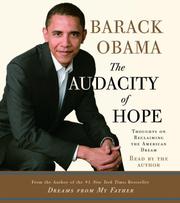
Review: The Audacity of Hope: Thoughts on Reclaiming the American Dream by Barack Obama
by Barack Obama

Review: Six of Crows by Leigh Bardugo
by Leigh Bardugo
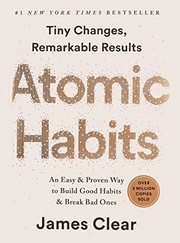
Review: Atom Habits: An Easy & Proven Way to Build Good Habits & Break Bad Ones by James Clear
by James Clear