
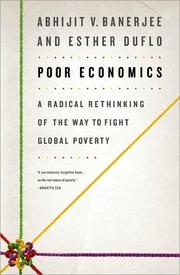
Review: Poor Economics: A Radical Rethinking of the Way to Fight Global Poverty by Abhijit V. Banerjee and Esther Duflo
In a Nutshell
Banerjee and Duflo rethink global poverty with evidence-based insights, challenging assumptions and revealing effective interventions through detailed case studies.
In a world often paralyzed by grand, sweeping pronouncements on how to solve poverty, Abhijit V. Banerjee and Esther Duflo offer a refreshingly grounded approach, one that finds profound meaning in the minutiae of everyday lives. Their argument isn't born from abstract economic models, but from an intimate, almost anthropological immersion into the struggles and resilience of those living on the margins.
"Poor Economics" is not a prescriptive manifesto urging immediate, universal solutions. Instead, it's an invitation to rethink our assumptions about poverty by examining the very human behaviors and decisions that shape its persistence. Through meticulously researched case studies and incisive analysis, Banerjee and Duflo dissect the complex realities faced by the poor, exploring their choices regarding health, education, savings, and entrepreneurship not as inherent deficits, but as rational responses to their challenging environments. They challenge the notion that the poor are simply lazy or lacking in foresight, presenting evidence that suggests otherwise – that they are often astute decision-makers navigating a landscape of scarce resources and limited opportunities.
What truly elevates "Poor Economics" is the authors' unwavering commitment to empirical evidence, gathered through the innovative use of randomized controlled trials (RCTs). This rigorous methodology allows them to isolate the impact of specific interventions, moving beyond anecdotal evidence to demonstrate what actually works, and crucially, what doesn't. Their prose, far from being dry academic jargon, is remarkably accessible and often deeply engaging. I found myself particularly drawn to their detailed explorations of seemingly small interventions – like deworming programs or the provision of textbooks – and the dramatic ripple effects they can have on individual lives and communities. The book shines brightest when it reveals the counterintuitive nature of poverty and the surprising efficacy of targeted, evidence-based solutions, akin to the way Michael Pollan, in his own explorations of food and culture, grounds complex ideas in sensory experience and relatable narratives. The authors possess a rare gift for translating complex statistical findings into compelling human stories, making the reader feel not like an observer, but a participant in the process of understanding.
However, while the book's dedication to empirical rigor is its greatest strength, it occasionally leads to a certain unevenness in pacing. Some sections, particularly those delving deeply into the statistical nuances of certain RCTs, might feel dense to readers less inclined towards quantitative analysis. While this depth is essential for the book's credibility, it can, at times, slow the narrative momentum. Additionally, while the authors admirably resist offering a one-size-fits-all solution, the sheer breadth of topics covered means that some areas, like the intricate political and structural barriers to poverty alleviation, are explored with less depth than the micro-level interventions. One might wish for a more sustained engagement with the systemic issues that perpetuate poverty, beyond the immediate impact of specific programs.
Ultimately, "Poor Economics" is a vital, intellectually invigorating, and deeply humane book that fundamentally reshapes our understanding of global poverty. It's a call to move beyond platitudes and embrace the power of evidence-based action. Readers will leave with a profound appreciation for the complexity of the challenge and, perhaps more importantly, a renewed sense of hope that effective solutions, grounded in the realities of the poor, are within our grasp. This is essential reading for anyone concerned with social justice, development economics, or simply the persistent question of how to build a more equitable world.
More Reviews
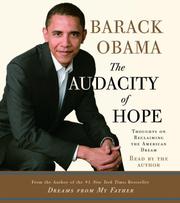
Review: The Audacity of Hope: Thoughts on Reclaiming the American Dream by Barack Obama
by Barack Obama

Review: Six of Crows by Leigh Bardugo
by Leigh Bardugo
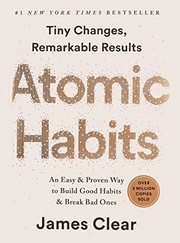
Review: Atom Habits: An Easy & Proven Way to Build Good Habits & Break Bad Ones by James Clear
by James Clear