
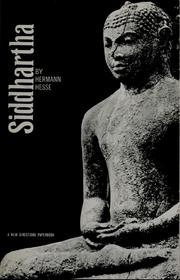
Review: Siddhartha by Hermann Hesse
In a Nutshell
Hesse's Siddhartha is a poetic spiritual odyssey of a young man's relentless pursuit of enlightenment through diverse life experiences.
Hermann Hesse’s *Siddhartha* is less a novel and more a philosophical pilgrimage, a tender, relentless pursuit of enlightenment that has captivated generations of seekers. It’s a book that whispers to the soul, urging us to question the very nature of our existence and the paths we choose to find meaning. Its enduring power lies in its elegantly simple, yet profoundly complex exploration of the human condition, a journey that feels both ancient and achingly contemporary.
At its core, *Siddhartha* follows the spiritual odyssey of a young Brahmin named Siddhartha who, dissatisfied with the traditional teachings of his faith, embarks on a lifelong quest for self-discovery. He leaves behind his comfortable life, his devoted friend Govinda, and the allure of the ascetic Brahmins and the austere Buddha to seek wisdom through diverse experiences – from the sensual embrace of a courtesan to the harsh realities of commerce and the quiet contemplation of a ferryman. It is a narrative that charts the soul’s winding road, acknowledging that true understanding often emerges not from prescribed doctrines but from the raw, unvarnished lessons of life itself.
What works so beautifully in *Siddhartha* is its exquisite prose and the hypnotic rhythm with which Hesse unfurls the protagonist’s journey. The language is luminous, imbued with a poetic grace that makes even the most abstract philosophical concepts feel tangible and deeply felt. I found myself particularly struck by Hesse's ability to render Siddhartha's internal struggles with such palpable empathy. There’s a profound honesty in how Siddhartha grapples with his desires, his disillusionments, and his moments of profound insight. The relationship between Siddhartha and Kamala, the courtesan, for instance, is depicted with a sensitivity that transcends simple carnal attraction, highlighting the spiritual awakening that can occur even in the most unexpected of unions. Similarly, the wisdom imparted by Vasudeva, the ferryman, is not delivered as a lecture but as a gentle unfolding of universal truths, echoing the quiet profundity found in some of Lao Tzu’s teachings or even the insightful parables of Antoine de Saint-Exupéry in *The Little Prince*.
The pacing, for the most part, feels organic to Siddhartha's evolving understanding. The early sections, detailing his asceticism and his initial encounters with the Buddha, establish a strong foundation. The middle portion, where he immerses himself in the material world, might feel a touch protracted to some readers, but I believe this extended exploration is crucial to highlighting the breadth of experiences Siddhartha deems necessary before arriving at his ultimate understanding. It’s this willingness to delve into the ‘follies’ of life, as Hesse might call them, that prevents the book from becoming an arid philosophical treatise. The eventual return to simplicity and the profound connection Siddhartha develops with the river symbolize a powerful coming home to oneself, a testament to the cyclical nature of learning and growth.
If there’s an area where *Siddhartha* could be considered to lean more heavily on its thematic strength than on narrative complexity, it might be in the character of Govinda. While essential as Siddhartha’s foil and a mirror to his journey, Govinda often remains a more passive observer. His unwavering devotion, while admirable, can sometimes make him feel less like a fully realized character and more like a thematic device. However, this is a minor quibble in a work that prioritizes the singular internal landscape of its protagonist. The very structure of the novel is designed to focus our attention inward, on Siddhartha’s evolving consciousness, and in this aim, it succeeds magnificently.
Ultimately, *Siddhartha* is a timeless meditation on the search for meaning, a book that offers solace and guidance without providing easy answers. It is perfect for those who find themselves at a crossroads, questioning their purpose, or yearning for a deeper connection with themselves and the world. Readers will walk away not with a definitive map to enlightenment, but with a profound appreciation for the journey itself, a journey that is as unique and individual as the human heart. Hesse reminds us that the most profound truths are often found not in the accumulation of knowledge, but in the quiet wisdom of experience.
More Reviews

Review: The Audacity of Hope: Thoughts on Reclaiming the American Dream by Barack Obama
by Barack Obama
Review: Six of Crows by Leigh Bardugo
by Leigh Bardugo
Review: Atom Habits: An Easy & Proven Way to Build Good Habits & Break Bad Ones by James Clear
by James Clear