

Review: The Anarchy: The East India Company, Corporate Violence, and the Pillage of an Empire by William Dalrymple
In a Nutshell
William Dalrymple's "The Anarchy" uncovers the brutal rise of the East India Company as a private army plundering an empire.
William Dalrymple has a gift for unearthing the grim ironies of history, and in *The Anarchy*, he excavates one of the most potent: that the world’s first truly global corporation, the East India Company, was not merely a trading entity but a rapacious, private army that systematically dismantled an empire and rerouted its wealth to the West. It’s a story that feels both devastatingly relevant and chillingly familiar, a stark reminder of how power, profit, and violence have long been intertwined on the global stage.
The Anarchy plunges us into the chaotic 18th century of India, a period of profound flux following the decline of the Mughal Empire. Dalrymple focuses on the meteoric rise of the East India Company, transforming from humble merchants into the de facto rulers of vast swathes of the subcontinent through a brutal combination of military might, astute political maneuvering, and sheer opportunism. The book chronicles the pivotal conflicts, the intricate alliances, and the often-unseen human cost of this unprecedented corporate conquest, painting a visceral picture of a nation being plundered not by a nation-state, but by a shareholders' enterprise.
What elevates *The Anarchy* beyond a mere historical account is Dalrymple’s masterful storytelling and his unwavering commitment to presenting the narrative through the eyes of those who lived it. He breathes life into a cast of characters who are far from the abstract figures of historical texts. We encounter the calculating ambition of Robert Clive, the desperate machinations of Indian rulers like Mir Qasim and Tipu Sultan, and the often-brutal pragmatism of the Company’s soldiers and administrators. Dalrymple’s prose is both elegant and muscular, capable of conjuring the dust and din of battlefield skirmishes one moment and the suffocating intrigue of courtly politics the next. I found myself utterly absorbed by his ability to weave together multiple perspectives, revealing the moral ambiguities and conflicting motivations that drove this epochal transformation. The book’s structure, moving from the fragmented power struggles on the ground to the distant machinations in London, brilliantly captures the sprawling nature of the Company’s operations and its insatiable hunger for control.
Dalrymple’s deep immersion in the primary sources is evident on every page, bringing a freshness and vividness that can sometimes be lacking in broader historical surveys. He doesn't shy away from the sheer violence and exploitation inherent in the Company’s rise, detailing massacres, famines, and the systematic extraction of wealth with unflinching honesty. This is not a sanitized history; it’s a raw, unflinching look at the foundations of British imperial power, laid bare with a historian’s rigor and a novelist’s flair. The parallels he draws to modern corporate power, while subtle, are profoundly unsettling, prompting reflection on the enduring capacity of unchecked economic forces to shape global destinies.
If there’s a point where *The Anarchy* might falter slightly, it’s perhaps in the sheer density of its narrative. The 18th-century Indian political landscape was extraordinarily complex, and Dalrymple’s commitment to detail means the reader is often navigating a labyrinth of shifting alliances and obscure princely states. While this contributes to the book’s richness, there are moments, particularly in the middle sections, where the narrative can feel a touch overwhelming, demanding sustained concentration. A slightly more streamlined approach to certain geopolitical intricacies might have enhanced the overall flow for some readers, though it’s a minor quibble in an otherwise exceptional work.
Ultimately, *The Anarchy* is a triumphant work of history that forces us to confront uncomfortable truths about empire, capitalism, and the human capacity for both ambition and brutality. Dalrymple has delivered a book that is not only meticulously researched and beautifully written but also profoundly important, a vital corrective to simplistic narratives of colonial history. It is essential reading for anyone seeking to understand the origins of modern global inequalities and the enduring legacy of corporate power. Dalrymple doesn't just tell us what happened; he makes us feel the earth tremble beneath the march of an empire built on profit and paid for in blood.
More Reviews
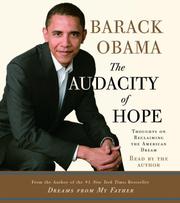
Review: The Audacity of Hope: Thoughts on Reclaiming the American Dream by Barack Obama
by Barack Obama
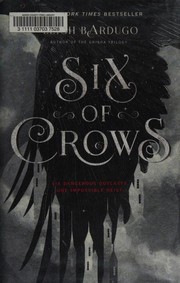
Review: Six of Crows by Leigh Bardugo
by Leigh Bardugo
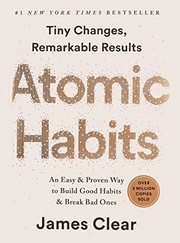
Review: Atom Habits: An Easy & Proven Way to Build Good Habits & Break Bad Ones by James Clear
by James Clear