
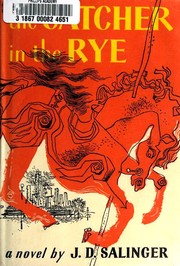
Review: The Catcher in the Rye by J.D. Salinger
In a Nutshell
J.D. Salinger's 'The Catcher in the Rye' is a raw, authentic portrayal of adolescent alienation and the painful search for truth.
Holden Caulfield. The name itself conjures a particular brand of adolescent angst, a sneering lament for a world perceived as irredeemably "phony." J.D. Salinger’s *The Catcher in the Rye* doesn’t just introduce us to this iconic character; it plunges us headfirst into the churning vortex of his mind, forcing us to confront the disquieting truths about innocence lost and the messy, often painful, transition into adulthood.
The novel, narrated by the sixteen-year-old Holden Caulfield, chronicles a few tumultuous days in his life after he's expelled from his prestigious boarding school, Pencey Prep. Instead of returning home to face his parents, Holden embarks on a solitary, aimless journey through New York City, a city teeming with the very phoniness he despises. He encounters a cast of characters – former teachers, old girlfriends, pimps, prostitutes, and nuns – each encounter serving as a further catalyst for his spiraling disillusionment and his desperate search for genuine connection in a world he feels increasingly alienated from.
What works so profoundly about *The Catcher in the Rye* is its unflinching, almost visceral, portrayal of adolescent alienation. Salinger masterfully captures the unique cadence of Holden's voice – the repetitive "and all," the sardonic observations, the desperate pleas for authenticity. It’s a voice that, despite its flaws and self-deception, resonates with a startlingly raw honesty. The first-person narration is not merely a device; it is the very fabric of the novel, allowing us an intimate, often uncomfortable, proximity to Holden’s anxieties, his deep-seated loneliness, and his desperate yearning to protect the fleeting moments of childhood innocence. This is a book that, for many, feels like a secret whispered, a confirmation that the confusing, often contradictory feelings of adolescence are not unique to them. The stream-of-consciousness style, while potentially jarring to some, perfectly mirrors the chaotic, unfiltered nature of a teenage mind grappling with complex emotions and a rapidly changing reality, a feat reminiscent of the introspective depth found in some of Joyce’s earlier works, though distilled into a far more accessible, angsty register.
The enduring power of *The Catcher in the Rye* lies in its refusal to offer easy answers or neat resolutions. Holden isn't a hero in the traditional sense; he’s a deeply flawed, often irritating, and profoundly human protagonist. His quest to be the "catcher in the rye," saving children from falling off a cliff into the adult world, is a beautiful, albeit naive, metaphor for his desire to preserve innocence. The novel doesn't shy away from the ugliness of his thoughts or the misguided nature of his actions, and it’s precisely this unflinching honesty that makes him so unforgettable. I found myself simultaneously frustrated by his cynicism and deeply sympathetic to his underlying vulnerability. The emotional authenticity of his internal monologue is the novel's greatest triumph, a feat that continues to captivate readers decades after its initial publication.
However, there are moments where Holden’s relentless negativity can feel a touch repetitive, bordering on the monotonous. While the cyclical nature of his complaints is integral to his character, there are stretches where the narrative momentum could have benefited from a slightly broader emotional palette or a more varied pace. The encounters, while thematically relevant, occasionally feel like vignettes that don’t always coalesce into a stronger overarching narrative arc beyond Holden’s internal struggle. Some might also argue that the ending, while fitting for Holden's character and the novel’s themes, leaves the reader with a sense of lingering ambiguity that doesn't fully satisfy the narrative tension built throughout the story, a common critique of stories that prioritize psychological realism over plot resolution.
Ultimately, *The Catcher in the Rye* remains a seminal work, a touchstone for anyone who has ever felt like an outsider looking in, who has grappled with the perceived hypocrisy of the adult world. It's a novel that doesn't offer comfort so much as recognition, a mirror held up to the often-painful process of growing up. Readers will walk away not with definitive answers, but with a profound understanding of the enduring struggle for authenticity in a world that so often rewards artifice. Salinger’s masterpiece is less a story about what happens, and more a deep dive into the turbulent consciousness of a boy on the precipice of becoming.
More Reviews
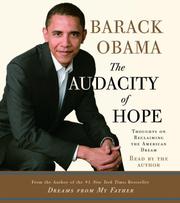
Review: The Audacity of Hope: Thoughts on Reclaiming the American Dream by Barack Obama
by Barack Obama
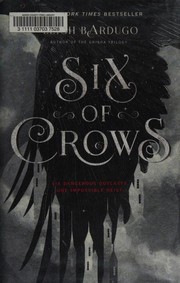
Review: Six of Crows by Leigh Bardugo
by Leigh Bardugo
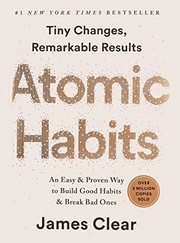
Review: Atom Habits: An Easy & Proven Way to Build Good Habits & Break Bad Ones by James Clear
by James Clear