
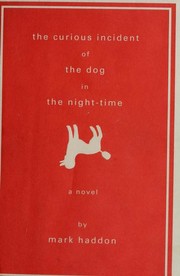
Review: The Curious Incident of the Dog in the Night-Time by Mark Haddon
In a Nutshell
A teenage boy with a unique way of thinking investigates a neighbor's dog's murder, uncovering family secrets and his own path to independence.
Mark Haddon’s *The Curious Incident of the Dog in the Night-Time* doesn't just invite us into the mind of its narrator; it practically hijacks our own perceptions, forcing us to see the world through a lens that is at once profoundly familiar and utterly alien. It's a testament to Haddon’s skill that a story ostensibly about a murdered dog and a missing father can blossom into such a moving exploration of connection, identity, and the often-unseen architecture of human behavior.
At its heart, the novel is the chronicle of Christopher Boone, a fifteen-year-old boy who identifies as having a "special way of thinking" – a description that artfully sidesteps diagnostic labels while vividly conveying his experience of the world. When he discovers his neighbor’s dog, Wellington, impaled by a garden fork, Christopher embarks on a detective mission to uncover the killer. This investigation, however, is merely the catalyst for a far more profound journey, one that will shatter his carefully constructed reality and propel him into the chaotic, unpredictable landscape of adult relationships and his own burgeoning understanding of himself.
What works so extraordinarily well in *The Curious Incident* is Haddon’s unwavering commitment to Christopher’s voice. The narrative is a masterclass in perspective, rendered with a precision and logic that is both endearing and disquieting. Christopher’s inability to comprehend metaphors, his aversion to physical touch, and his meticulous cataloging of facts and patterns are not mere quirks; they are the very fabric of his being, and Haddon weaves them into the prose with remarkable authenticity. The use of prime numbers as chapter headings, the detailed diagrams, and the starkly logical exposition of complex emotions create a reading experience that feels both intellectually stimulating and deeply empathetic. It’s akin to reading poetry written in the language of pure reason, a style that, against all odds, manages to convey a raw, often heartbreaking emotional truth. One can see echoes of the unvarnished honesty found in works like Daniel Keyes’ *Flowers for Algernon*, though Haddon’s focus remains firmly on the present, the immediate sensory input and logical deductions that define Christopher's existence.
The novel’s pacing is generally excellent, propelling Christopher through his investigation with a relentless momentum that mirrors his own determined nature. The secondary characters, particularly his parents, are drawn with a complexity that belies their initial, often difficult, presentations. They are flawed, struggling individuals doing their best, and their interactions with Christopher, seen through his unique filter, reveal the profound misunderstandings and unacknowledged sacrifices that underpin so many family dynamics. The gradual unraveling of the mystery surrounding Wellington's death becomes inextricably linked to the unveiling of his family's own secrets, creating a dual narrative that is both compelling and emotionally resonant.
If there’s a point where the novel might falter, it's perhaps in the sheer relentless nature of Christopher’s internal logic. While integral to his character, there are moments where the narrative could have benefited from a slightly broader emotional palette, a hint of something beyond pure rationalization, even if filtered through his specific lens. Additionally, while the climax of his journey is undeniably impactful, the ultimate resolution, while hopeful, skirts the edges of predictability. These are minor quibbles, however, in what is otherwise a brilliantly executed novel. The journey itself, the forging of understanding and resilience in the face of overwhelming circumstances, is far more significant than any neatly tied bow.
*The Curious Incident of the Dog in the Night-Time* is a profound triumph, a book that challenges our assumptions about neurodiversity and the very definition of intelligence. It’s a story that will make you laugh, make you cringe, and ultimately, make you see the world with a little more clarity and a lot more compassion. It reminds us that understanding doesn’t always come in tidy packages, and that sometimes, the most ordinary of lives hold the most extraordinary of truths. This is a novel that lingers long after the final page, a poignant reminder of the incredible strength of the human spirit and the universal need for connection.
More Reviews
Review: The Audacity of Hope: Thoughts on Reclaiming the American Dream by Barack Obama
by Barack Obama
Review: Six of Crows by Leigh Bardugo
by Leigh Bardugo
Review: Atom Habits: An Easy & Proven Way to Build Good Habits & Break Bad Ones by James Clear
by James Clear