
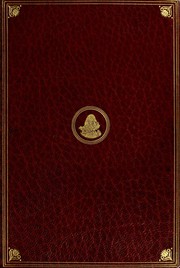
Review: The Gift: Poems by Li-Young Lee
In a Nutshell
Li-Young Lee's "The Gift" offers intimate poems exploring family, memory, and identity with profound emotional honesty and exquisite language.
Li-Young Lee’s “The Gift: Poems” isn’t a collection you simply read; it’s a collection you inhabit, a landscape where memory, family, and the profound, often unspoken, currents of love are mapped with an almost sacred precision. Lee doesn’t just write about the past; he conjures its very scent, its lingering touch, making the act of remembering a visceral, present experience.
At its heart, “The Gift” is a deeply personal exploration of Lee’s Chinese heritage, his childhood in Indonesia, and his eventual emigration to America, all filtered through the lens of his complex relationships with his parents, particularly his father. These poems are not grand pronouncements but quiet illuminations, tender dissections of everyday moments that reveal the extraordinary weight and beauty they carry. We witness the mundane details of domestic life – the peeling of fruit, the mending of clothes, the awkward silences – transformed into profound meditations on identity, loss, and the enduring power of connection.
What works so beautifully, and indeed, what has cemented Lee’s reputation, is his extraordinary command of language. His poems possess a deceptive simplicity, a surface calm that belies the turbulent depths beneath. He has a gift for finding the singular, resonant image that unlocks entire worlds of emotion. Consider the title poem, “The Gift,” where the simple act of a father giving his son a breath of air, a shared moment of existence, becomes an almost spiritual revelation. Lee’s ability to imbue such ordinary actions with such profound significance is nothing short of masterful. His lines often unfurl with a gentle, almost confessional rhythm, drawing the reader into an intimate dialogue. He’s a poet who understands that the most potent truths are often whispered, not shouted, and he delivers these whispers with an unwavering clarity and grace, reminding me at times of the quiet power found in some of Pablo Neruda’s later works, or the familial intimacy of Sharon Olds’ explorations, though Lee’s touch is often more ethereal.
The sheer emotional honesty of these poems is also a significant strength. Lee doesn’t shy away from the difficulties of family life, the moments of misunderstanding or distance, but even in these instances, there is an underlying current of profound love and acceptance. The poem “The Name” grappling with his father’s identity and its transmission through generations is particularly moving in its exploration of belonging and the search for self within a diasporic existence. He navigates the complexities of cultural inheritance with a delicate hand, never resorting to easy answers or sentimental platitudes.
If there’s an area where “The Gift” could perhaps be seen as less immediately accessible, it might be in its deliberate pacing. Lee’s poems often unfold slowly, like a flower opening to the sun, and while this meditative quality is largely a strength, there are moments in longer sequences where the reader might wish for a slightly quicker emotional arc or a more defined narrative thread. However, this is a minor quibble in the face of the overall richness and depth. One could also argue that the sheer weight of personal history, while compelling, might occasionally feel overwhelming to a reader unfamiliar with the broader context of Lee’s life and work, though the poems are skillfully crafted to stand on their own.
Ultimately, “The Gift: Poems” is a testament to the power of poetry to illuminate the human condition in its most intimate and universal dimensions. It’s a book that asks us to pay closer attention to the small miracles that populate our lives, to the profound love that often lies dormant in the everyday. Readers who appreciate poetry that is both deeply personal and universally resonant, that probes the tenderest corners of the heart with a quiet intensity, will find themselves returning to these pages again and again. Lee offers not just poems, but a way of seeing, a way of being present in the world, and that, in itself, is a profound and lasting gift.
More Reviews
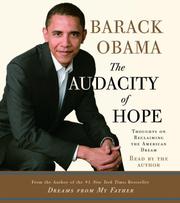
Review: The Audacity of Hope: Thoughts on Reclaiming the American Dream by Barack Obama
by Barack Obama
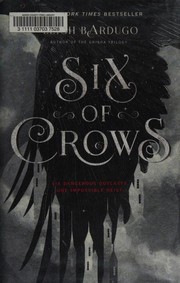
Review: Six of Crows by Leigh Bardugo
by Leigh Bardugo
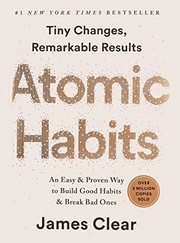
Review: Atom Habits: An Easy & Proven Way to Build Good Habits & Break Bad Ones by James Clear
by James Clear