

Review: The Girl with the Dragon Tattoo by Stieg Larsson
In a Nutshell
A disgraced journalist and a brilliant hacker unravel a decades-old mystery, uncovering dark family secrets and brutal crimes in this gripping Swedish thriller.
Stieg Larsson’s "The Girl with the Dragon Tattoo" doesn't just tell a story; it plunges you headfirst into a chilling, intricate world where the rot of corruption festers beneath the veneer of Swedish respectability. This is a novel that grabs you by the throat with its unflinching portrayal of violence and its exploration of how secrets, both personal and societal, can leave indelible scars.
At its core, the novel is a complex interwoven tapestry. A disgraced financial journalist, Mikael Blomkvist, and a fiercely unconventional, brilliant hacker named Lisbeth Salander, are brought together to investigate a forty-year-old cold case: the disappearance of a young woman from a wealthy, powerful family. What begins as a journalistic endeavor quickly morphs into a dangerous descent into a labyrinth of family secrets, misogyny, and brutal crimes, all set against the stark beauty of the Swedish landscape.
What works beautifully in Larsson’s debut is the electrifying, almost symbiotic, partnership between Blomkvist and Salander. Blomkvist, a man of integrity wrestling with his own professional demons, provides the traditional investigative anchor, while Salander, a character so uniquely drawn she feels ripped from a darker, more contemporary fairy tale, is the engine of disruption and discovery. Her intelligence is staggering, her resilience almost superhuman, and her methods unorthodox to say the least. Larsson’s prose, while not always overtly lyrical, possesses a gritty power that effectively conveys the bleakness of the themes and the urgency of the plot. The pacing is masterfully handled, building tension with a slow burn that erupts into bursts of shocking violence and startling revelations. It’s a testament to Larsson’s skill that even the most gruesome elements serve the narrative and character development, rather than feeling gratuitous, echoing the unsettling realism found in the works of authors like Jo Nesbø.
However, where the novel occasionally falters is in its sprawling subplot concerning Blomkvist's professional life. While essential to establishing his character and the initial premise, these sections, particularly in the first half, can sometimes feel like they’re slogging through the muck when the reader’s attention is already captivated by the more compelling mystery of the Vanger family and the magnetic pull of Lisbeth Salander. There are also moments where the sheer volume of intricate details, while contributing to the realism, can feel overwhelming, demanding a significant investment of reader attention. The sheer brutality, while thematically relevant, can also, at times, push the boundaries of comfortable reading for some.
Ultimately, "The Girl with the Dragon Tattoo" is a masterclass in suspense, a gripping exploration of trauma and resilience, and the introduction of one of modern literature’s most unforgettable characters. It’s a novel that will linger long after the final page, forcing you to confront uncomfortable truths about the darkness that can lie hidden beneath the surface. This book is for readers who crave intelligence, grit, and a protagonist who rewrites the rules of engagement. Prepare to be consumed.
More Reviews

Review: The Audacity of Hope: Thoughts on Reclaiming the American Dream by Barack Obama
by Barack Obama
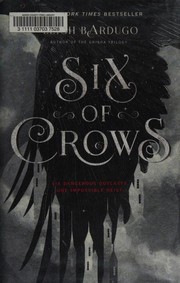
Review: Six of Crows by Leigh Bardugo
by Leigh Bardugo

Review: Atom Habits: An Easy & Proven Way to Build Good Habits & Break Bad Ones by James Clear
by James Clear