
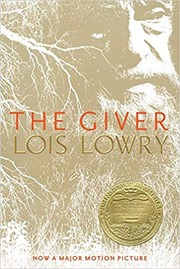
Review: The Giver by Lois Lowry
In a Nutshell
A boy in a utopian society learns the true cost of peace by receiving the suppressed memories of his community.
Lois Lowry’s *The Giver* is less a story and more a visceral question posed to the reader: what is the true cost of comfort? It whispers of a society meticulously scrubbed clean of pain, a promise of utopia that, upon closer inspection, reveals itself to be a gilded cage.
Set in a seemingly idyllic community where sameness reigns supreme and emotions are suppressed for the sake of stability, *The Giver* follows twelve-year-old Jonas as he is chosen for the unique and frightening role of the next Receiver of Memory. This position entails being entrusted with the memories of the past – the joy, the sorrow, the color, the music, the pain – experiences that have been deliberately erased from the collective consciousness to ensure a life devoid of conflict. As Jonas delves deeper into these inherited recollections, his world, once black and white, begins to explode with vibrant hues and complex truths, forcing him to confront the superficiality of his own existence and the profound injustice at the heart of his community.
What elevates *The Giver* beyond a simple dystopian narrative is its breathtakingly poignant exploration of memory and its essential role in what it means to be human. Lowry’s prose is deceptively simple, yet it carries an immense emotional weight. She crafts a world that feels chillingly plausible, a testament to our innate desire for order and security, even at the expense of our very selves. Jonas's journey from a compliant child to a reluctant revolutionary is rendered with exquisite care. The gradual unveiling of the community's secrets, particularly through the eyes of the Giver himself, is masterfully paced. The Giver, a character who carries the burden of all humanity's experiences, is a profound creation. His conversations with Jonas are imbued with a wisdom that feels both ancient and desperately relevant, akin to the philosophical depth found in Ursula K. Le Guin’s explorations of societal structures. The introduction of color, for instance, is not merely a descriptive device; it’s a metaphor for the awakening of consciousness, the rediscovery of passion, and the realization of individuality.
However, while the book’s impact is undeniable, I found myself wishing for a slightly more fleshed-out exploration of certain aspects, particularly the mechanics of the community's control. The concept of genetic manipulation for emotional suppression is hinted at but never fully explored, leaving a slight void in the logical underpinnings of their society. Furthermore, the climactic escape, while emotionally charged, felt a touch abrupt, and I yearned for a deeper dive into the immediate aftermath and the uncertainty of their future. A few more chapters dedicated to the arduous journey and the internal struggles Jonas faces during that perilous flight might have solidified the novel's thematic resonance even further, drawing parallels to the arduous journeys in William Golding's *Lord of the Flies*, though with a starkly different moral compass.
Ultimately, *The Giver* is a profound and unsettling masterpiece that lingers long after the final page is turned. It serves as a vital reminder that true living requires embracing the full spectrum of human experience, the bitter alongside the sweet. It is a book that sparks conversation, encourages introspection, and, in its quiet way, ignites a fierce appreciation for the messy, beautiful, and utterly essential tapestry of our own lives. It asks us to consider what we would be willing to sacrifice for peace, and what we would fight to reclaim for a single, true feeling.
This novel is a cornerstone for young adult literature, urging readers to question the nature of happiness and the importance of individuality in a world that often prizes conformity.
More Reviews
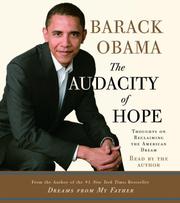
Review: The Audacity of Hope: Thoughts on Reclaiming the American Dream by Barack Obama
by Barack Obama
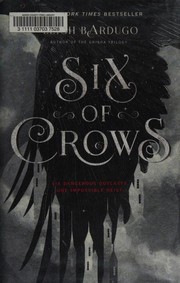
Review: Six of Crows by Leigh Bardugo
by Leigh Bardugo
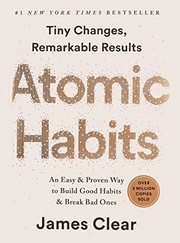
Review: Atom Habits: An Easy & Proven Way to Build Good Habits & Break Bad Ones by James Clear
by James Clear