
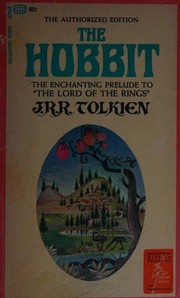
Review: The Hobbit by J.R.R. Tolkien
In a Nutshell
A comfort-loving hobbit's reluctant journey to reclaim treasure from a dragon, uncovering his own courage and the magic of Middle-earth.
J.R.R. Tolkien’s *The Hobbit* is more than just a charming prelude to the epic sweep of *The Lord of the Rings*; it is a foundational myth, a masterclass in whimsical adventure that has, for generations, opened the door to a world far richer and more intricate than many a reader initially anticipates.
At its core, *The Hobbit* chronicles the unexpected journey of Bilbo Baggins, a comfort-loving hobbit whose quiet life in the Shire is irrevocably disrupted by the arrival of Gandalf the wizard and thirteen dwarves. Their quest: to reclaim the Lonely Mountain and its vast treasure from the fearsome dragon Smaug. What begins as a reluctant expedition for Bilbo soon transforms into a crucible where his hidden courage and resourcefulness are forged, introducing him to trolls, goblins, elves, and a creature of singular importance – Gollum – whose riddle-bargaining with Bilbo proves pivotal.
What works so beautifully, and indeed, what has cemented *The Hobbit* in the literary firmament, is its masterful blend of the mundane and the magical. Tolkien, a scholar of ancient languages and folklore, imbues this tale with a palpable sense of history and authenticity, even as he conjures creatures and landscapes from the deepest wells of imagination. The prose itself is a delight, possessing a lyrical, almost ballad-like quality that draws you in with its gentle cadence. Consider the description of Thorin Oakenshield’s lineage, or the chilling beauty of the Elvenking’s halls – these passages resonate with a deep, resonant mythology. The pacing, particularly in the early stages, feels perfectly calibrated for a story of discovery and reluctant heroism; each encounter, from the bumbling trolls to the shadowy encounter with the spiders of Mirkwood, serves to both test and reveal Bilbo's evolving character. Bilbo’s transformation from a rather timid hobbit, content with his pantry and garden, into a resourceful, brave individual is the story’s beating heart. His internal journey, as much as the external quest, is what gives the novel its enduring power, reminding us that heroism can be found in the most unassuming of individuals.
Yet, even a work as beloved as *The Hobbit* isn't entirely without its shadows of potential improvement. While the overarching narrative is wonderfully engaging, there are moments, particularly in the middle third of the book, where the episodic nature of the journey can lead to a slight dip in narrative momentum. The journey through Mirkwood, for instance, while vital for character development and plot progression, feels somewhat drawn out, a sequence of peril and escape that, while exciting, doesn't quite possess the same narrative tightness as the encounters preceding it. Furthermore, while the resolution with the Battle of Five Armies is grand in scope and necessary for the broader political landscape of Middle-earth, it occasionally feels a touch too crowded, a multitude of characters and motivations converging that can, at times, dilute the focus from Bilbo’s personal arc, which had been so finely honed throughout the preceding chapters.
Ultimately, *The Hobbit* is a singular achievement, a book that manages to be both an accessible entry point into a vast and complex world and a self-contained gem of a story in its own right. It’s a tale that speaks to the quiet adventurer lurking within us all, a reminder that the greatest treasures are often not gold, but the courage found within oneself and the friendships forged on a perilous road. Readers will find themselves not just entertained, but fundamentally changed, carrying a piece of Bilbo’s wisdom and the echo of a dragon’s roar long after the final page is turned. It’s a journey worth taking, again and again.
More Reviews
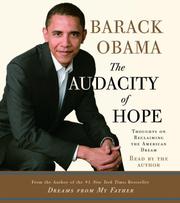
Review: The Audacity of Hope: Thoughts on Reclaiming the American Dream by Barack Obama
by Barack Obama
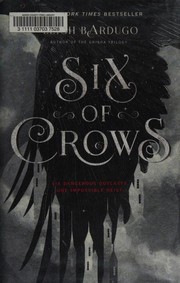
Review: Six of Crows by Leigh Bardugo
by Leigh Bardugo
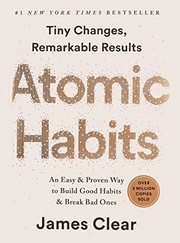
Review: Atom Habits: An Easy & Proven Way to Build Good Habits & Break Bad Ones by James Clear
by James Clear