
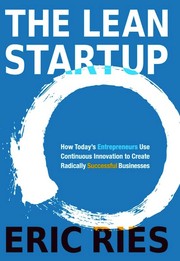
Review: The Lean Startup by Eric Ries
In a Nutshell
Eric Ries's 'The Lean Startup' offers a scientific, iterative approach to innovation, focusing on validated learning and customer feedback to minimize waste and build successful ventures.
Eric Ries's "The Lean Startup" landed in the business world like a meticulously engineered disruption, promising to demystify the chaotic alchemy of bringing new ideas to market. It’s a text that doesn't just offer advice; it proposes a fundamental shift in how we approach innovation, urging us to trade grand, often unfounded, visions for relentless experimentation and learning.
At its core, the book argues for a more scientific, iterative approach to building products and businesses, particularly in the realm of startups where uncertainty reigns supreme. Ries introduces the concept of the "build-measure-learn" feedback loop, a framework designed to minimize wasted time and resources by continuously validating assumptions with real customer feedback. It’s about avoiding the trap of building something nobody wants by getting it into the hands of users as quickly as possible, learning from their reactions, and pivoting or persevering accordingly. This isn't about a lack of ambition, but about a smarter, more resilient path to achieving it.
What truly elevates "The Lean Startup" is its pragmatic, grounded perspective. Ries avoids the airy platitudes often found in entrepreneurship literature, instead providing a robust, actionable methodology. His prose, while clear and direct, possesses an understated elegance that makes complex concepts accessible. The book is peppered with compelling anecdotes from real-world companies, both successes and failures, illustrating the principles in vivid detail. I particularly appreciated his emphasis on "validated learning" – the idea that progress isn't just about writing code or designing features, but about empirically proving that your core hypotheses about customer needs and market viability are sound. It's this focus on evidence-based decision-making that distinguishes it from more traditional, intuition-driven business books. The concept of the Minimum Viable Product (MVP), for instance, is presented not as a bare-bones prototype, but as a strategic tool for rapid learning, a nuanced idea that’s often oversimplified elsewhere.
The book’s strengths lie in its coherent framework and its ability to reframe failure not as an endpoint, but as a crucial data point. Ries's work is deeply influenced by lean manufacturing principles, and he masterfully translates those ideas into the unpredictable landscape of software and service innovation. It’s a perspective that has clearly resonated, permeating business schools and incubators globally. For anyone who has ever felt the sting of a product launch that fell flat, or the gnawing uncertainty of early-stage venture, Ries offers a tangible, almost therapeutic, path forward. It’s akin to how a great science textbook guides you through complex theories with clarity and precision; "The Lean Startup" does the same for the often-bewildering world of creating something new.
However, while the framework is powerful, there are moments where the relentless focus on the build-measure-learn cycle can feel a touch repetitive. The sheer volume of case studies, while illustrative, occasionally leads to a slight dip in pacing, particularly in the middle sections. While Ries stresses the importance of qualitative customer feedback, I sometimes wished for a deeper exploration of how to synthesize diverse qualitative insights into actionable quantitative goals. The book’s primary audience is clearly the aspiring or early-stage entrepreneur, and while its lessons are universally applicable, some seasoned executives might find the initial chapters cover familiar ground, albeit with a fresh terminology and structure.
Ultimately, "The Lean Startup" is less a prescriptive manual and more a philosophical toolkit for navigating the inherent uncertainties of innovation. It’s a call to embrace rigorous experimentation and continuous adaptation, transforming the often-feared prospect of failure into a catalyst for growth. Readers will walk away with a powerful, evidence-based mindset that can dramatically improve their chances of building sustainable, impactful ventures. It’s a must-read for anyone looking to build something meaningful in a world that’s constantly changing, providing not just a method, but a new way of thinking about creating the future.
More Reviews
Review: The Audacity of Hope: Thoughts on Reclaiming the American Dream by Barack Obama
by Barack Obama

Review: Six of Crows by Leigh Bardugo
by Leigh Bardugo
Review: Atom Habits: An Easy & Proven Way to Build Good Habits & Break Bad Ones by James Clear
by James Clear