
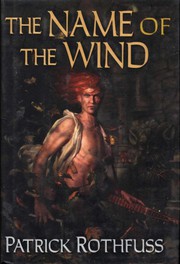
Review: The Name of the Wind by Patrick Rothfuss
In a Nutshell
A legendary figure recounts his epic life story, from childhood prodigy to pursuit of arcane knowledge, in this masterfully written fantasy debut.
Few novels arrive with the fervent anticipation that surrounded Patrick Rothfuss’s *The Name of the Wind*, a debut that promised to redefine epic fantasy and, for many, delivered precisely that. It’s a story whispered into existence, a legend in the making, that asks profound questions about the nature of stories themselves, how they are told, and how they shape our understanding of the world and those within it.
At its heart, *The Name of the Wind* is the recounted autobiography of Kvothe, a legendary figure now living in quiet obscurity as an innkeeper in a remote corner of the world. Under the watchful eye of a chronicler, he begins to unravel the epic tapestry of his life, from his childhood as a gifted member of a troupe of traveling performers to his years of desperate poverty and relentless pursuit of knowledge at the University, a place of arcane arts and ancient secrets. This is not merely an adventure tale; it's a deep dive into the making of a myth, exploring the choices, sacrifices, and the raw, burning ambition that forge a man into a legend, for better or worse.
What truly sets *The Name of the Wind* apart is Rothfuss's masterful prose. It’s a prose so artful, so lyrical, that it frequently borders on poetry. He crafts sentences that sing, images that linger long after the page is turned. The world-building is intricate and immersive without ever feeling like an info-dump; the magic system, known as Sympathy, is presented with a beautiful blend of scientific rigor and mystical intuition, making it feel both believable and wondrous. Kvothe himself is a captivating protagonist, a prodigy whose brilliance is matched only by his flaws. His journey from a bright-eyed boy to a hardened, enigmatic man is rendered with remarkable emotional depth. I found myself utterly consumed by his quest for knowledge, his desperate need to understand the shadowy Chandrian, and his tangled relationships, particularly the enigmatic and frustrating Denna. It’s the kind of storytelling that reminds you why you fell in love with reading in the first place, a rare fusion of intellectual stimulation and pure, unadulterated wonder, reminiscent of the meticulously crafted worlds of Ursula K. Le Guin and the evocative storytelling of Neil Gaiman.
However, even in a book as brilliant as this, there are moments where the narrative momentum, so carefully built, can falter. The middle section, chronicling Kvothe’s time in Tarbean, while crucial for his development and establishing his resilience, occasionally feels like a prolonged sojourn that could have been more economically handled. While the slow burn is often intentional and effective in building atmosphere, there were times I craved a stronger push forward in the plot. Furthermore, the character of Denna, while central to Kvothe’s emotional arc, can sometimes feel less like a fully realized individual and more like a plot device, her motivations and actions occasionally frustratingly opaque, even for a character designed to be so. This is a minor quibble in the grand scheme, but one that prevents the book from achieving absolute perfection.
Ultimately, *The Name of the Wind* is a triumph of modern fantasy, a richly imagined and exquisitely written novel that transcends genre. It’s a book for those who love stories about stories, for readers who appreciate language crafted with care, and for anyone who believes in the power of a single voice to weave a world. You will emerge from its pages not just having read a book, but having experienced a life, a legend, a name that echoes long after the final chapter. The wait for the conclusion to Kvothe’s story has been notoriously long, but the journey within this first volume is so profoundly rewarding that it almost makes the anticipation a virtue in itself. It’s a testament to Rothfuss’s skill that the story feels both complete and yet tantalizingly unfinished, leaving the reader desperate for more, a magician’s trick of narrative design.
More Reviews

Review: The Audacity of Hope: Thoughts on Reclaiming the American Dream by Barack Obama
by Barack Obama
Review: Six of Crows by Leigh Bardugo
by Leigh Bardugo
Review: Atom Habits: An Easy & Proven Way to Build Good Habits & Break Bad Ones by James Clear
by James Clear