
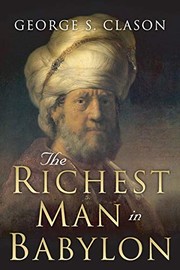
Review: The Richest Man in Babylon by George S. Clason
In a Nutshell
Ancient parables offer timeless, simple wisdom on saving, earning, and controlling expenses for lasting financial prosperity.
George S. Clason’s *The Richest Man in Babylon* isn't just a book; it's a time capsule, offering financial wisdom so enduring it feels as relevant today as it must have in ancient Mesopotamia. The simple truth it champions – that wealth is built not by chance but by disciplined habits – is a potent antidote to the quick-fix allure of modern financial schemes.
The book presents its timeless principles through a series of parables set in ancient Babylon, following the journeys of ordinary citizens who seek financial enlightenment from Arkad, the city's wealthiest man. These stories, woven together by a narrative frame of modern-day individuals discovering Arkad’s scrolls, are designed to distill complex financial concepts into easily digestible, memorable lessons. It’s less a novel and more a collection of fables, each illustrating a fundamental tenet of wealth creation and preservation. The core message revolves around saving a portion of one's income, investing it wisely, and controlling one's expenses, all presented with the gravitas of ancient wisdom.
What truly elevates *The Richest Man in Babylon* beyond a dry economics primer is its masterful storytelling and the sheer accessibility of its principles. Clason’s prose is refreshingly clear and unpretentious, mirroring the straightforward nature of the advice he dispenses. The parables are engaging, drawing the reader into the lives of characters like Bansir, Kobbi, and Shamatay, making their struggles and triumphs relatable even across millennia. I found myself particularly drawn to the character of Arkad, whose quiet confidence and profound understanding of financial mechanics make him an aspirational figure. The structure, with each scroll revealing a new layer of financial understanding, creates a natural rhythm that pulls you through the book. It’s akin to listening to a wise elder share hard-won truths, a stark contrast to the often-bombastic and jargon-filled discourse found in many contemporary finance books. The "pay yourself first" principle, for instance, is not just stated; it's demonstrated through character actions and their subsequent prosperity, imbuing the advice with an almost allegorical power.
While the book’s enduring charm lies in its simplicity, this very quality can, at times, feel a touch repetitive. The core tenets are reiterated with such consistency that an astute reader might wish for a bit more nuance or exploration of more complex financial scenarios. For instance, the book doesn’t delve deeply into the risks of investment or the impact of market fluctuations, focusing primarily on the foundational principles of saving and earning. While this laser focus is arguably its strength, a reader already familiar with basic budgeting might find the early chapters a bit too elementary. Furthermore, the characters, while serving their purpose as vehicles for the financial lessons, remain largely archetypal rather than deeply developed individuals, which is a common trade-off in didactic literature but worth noting for those seeking robust character arcs.
Ultimately, *The Richest Man in Babylon* is a foundational text that deserves its place on any bookshelf, particularly for those embarking on their financial journey. It's a book that reminds us that the secrets to accumulating wealth are not hidden in complex algorithms or insider trading, but in the cultivation of sound financial habits. It’s the kind of book you’ll want to revisit, perhaps as a comforting reminder of life’s enduring financial truths. Readers will walk away not with a magic formula, but with the empowering realization that financial success is an achievable, albeit disciplined, pursuit. It’s a classic for a reason, offering a timeless roadmap to prosperity, paved with prudence.
More Reviews
Review: The Audacity of Hope: Thoughts on Reclaiming the American Dream by Barack Obama
by Barack Obama
Review: Six of Crows by Leigh Bardugo
by Leigh Bardugo
Review: Atom Habits: An Easy & Proven Way to Build Good Habits & Break Bad Ones by James Clear
by James Clear